We acknowledge Australia’s Aboriginal and Torres Strait Islander peoples as the Traditional Custodians of the land on which we work and live and give respect to their Elders, past and present.

Read our Statement of Reflection

Your Cart

Your cart is empty right now...

Discover what's on
Your Stuff
Lists
No lists found
Create list
List name
0 Saved items
Updated: a few seconds ago
Getting Started
Get started with Your Stuff

A free Your Stuff account allows you to save, list and share your favourite collection items and articles. This account will give you access to Your Stuff, NFSA Player and Pro. You will need to create an additional account for Canberra event tickets.

Confirm
Skip to main content
National Film and Sound Archive of AustraliaNational Film and Sound Archive
National Film and Sound Archive of Australia
National Film and Sound Archive
National Film and Sound Archive of Australia
National Film and Sound Archive

Tasmania in 4K

These vintage promotional films for Tasmania, now restored in stunning 4K, take us on a dreamy journey through the island’s recent past, showing us the streetscapes, landscapes, fashions and pastimes of the 1930s and 1960s.

Written by Rose Mulready
23 June, 2025
4 minute read

These vintage promotional films for Tasmania, now restored in stunning 4K, take us on a dreamy journey through the island’s recent past, showing us the streetscapes, landscapes, fashions and pastimes of the 1930s and 1960s. They also provide an insight into how official versions of Tasmanian life were shaped, reflecting the ideals of the time. If you were a prospective tourist or immigrant, these films might well have lured you to this beautiful island.

1

Tasmania the Wonderland

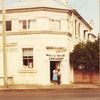
Tasmania is calling! This travelogue, thought to be part of a longer film produced for cinemas in 1935, is pitched at tourists but often takes a more formal, educational tone. To the accompaniment of chirpy newsreel strings, we’re shown the attractions of Hobart and its surrounds: cruising the unspoilt Derwent River, trundling along in double-decker trams, sailing on the harbour and playing on Sandy Beach.

There’s an element of parochial pride in the narration, which extols Hobart’s harbour as one of the five best in the world, lingers on the IXL factory with its annual production of 13 million tins, and sings the praises of Tasmanian apples, ‘which might grace even the table of the Royal house.’ That touch of Anglophilia is echoed in the descriptions of the Derwent valley, with its crops of fruit and hops, as reminiscent of ‘old England’.

This may be quaint in the context of orchards, but takes on a more sinister note in a visit to Hobart’s Beaumaris Zoo, where a Tasmanian devil on a leash is chivvied while the narrator accuses it of being ‘spiteful and cunning’. Harder still to watch is the footage of the last surviving thylacine (Tasmanian tiger) in captivity, pacing its small, barren cage. It’s a reminder of the care that must be taken to preserve and protect what makes Tasmania wonderful. Since 1996, Threatened Species Day has been held in Australia on 7 September, the day this thylacine died. 

Tasmania the Wonderful, although it seems to be incomplete, remains a detailed and valuable record of Hobart in the 1930s.

Tasmania the Wonderland in 4K, 1935.

National Film and Sound ArchiveAER3DMVM
2

Life in Australia: Hobart

The Life in Australia series showcased Australian cities in an idyllic light, hoping to attract prospective immigrants with carefully tailored visions of a peaceful, prosperous life in attractive settings. They were made by the Commonwealth Film Unit in 1966 during the final years of the White Australia policy, and their invitation to middle-class families is clear.

Life in Australia: Hobart uses the device of a cheery mail deliverer on his round to stitch together various scenes of the city, from its parks, fountains and shopping arcades to its harbourside views and glamorous theatre crowds. Factories, schools, laboratories and construction sites are shown as sites of calm and orderly industry, with the camera and soundtrack rendering production lines in almost balletic terms. Bowls, beers, bands and boats are the reward for a productive day.

Small-town friendliness with comfort, beauty, leisure and plenty is the offer, a ‘Lucky Country’ vision that captures the ideals of 20th-century officialdom – and its omissions. The divisions, diversity and complexity of 1960s Australia are smoothed into a homogenous dreamland with a soap-opera soundtrack, even as the film captures fascinating details of mid-century Hobart.

Find out more about the Life in Australia series 

Life in Australia: Hobart, 1966. Made by the Commonwealth Film Unit. Film Australia Collection.

National Film and Sound Archive6GYX5BBR
3

Life in Australia: Launceston

Come with us to spend a day in 1966 Launceston. This short film, shot by the Commonwealth Film Unit as part of the Life in Australia series, was an explicit appeal to potential immigrants and begins as a visitor to the city would, with aerial shots showing its position in the Tamar River valley, and a ride into town from the airport on the TAA bus.

Day is for industry: photogenic factories where ingenious machines are operated by expert hands; a thriving retail centre; orderly schools. Night is for neon, rock dancing, dinner dancing and the ballet. Leisure is plentiful: art galleries, historic homes, water sports, cycling and even archery beguile the time. Social bonds are formed at church and the agricultural show, and even the hospital is a place of smiles and flowers.

Despite a glimpse of a Buddhist statue, Life in Australia: Launceston is tailored to portray a certain model of ideal living that excludes dissent or difference: there is no mention of the city’s First Nations history, and class is elided in these crowds of happy, productive citizens enjoying life together.

For modern viewers, the lovingly shot details of vintage Launceston remain the film’s enduring interest and pleasure.

Find out more about the Life in Australia series 

Life in Australia: Launceston, 1966. Made by the Commonwealth Film Unit. Film Australia Collection.

National Film and Sound ArchiveY8SSEMTS

Looking for more?

Main image: Reflections on Huon River, Huon Valley, Tasmania, iStock. Credit: colbourne49, 2024

Collections to explore

  • Hobart

  • Tasmania

  • Adelaide

  • Start your own collection

    A free Your Stuff account allows you to save, organise and share your favourite videos, audio and stories.

More in Stories+

Personalized your experience

Save, create and share

With NFSA Your Stuff