We acknowledge Australia’s Aboriginal and Torres Strait Islander peoples as the Traditional Custodians of the land on which we work and live and give respect to their Elders, past and present.

Read our Statement of Reflection

Your Cart

Your cart is empty right now...

Discover what's on
Your Stuff
Lists
No lists found
Create list
List name
0 Saved items
Updated: a few seconds ago
Getting Started
Get started with Your Stuff

A free Your Stuff account allows you to save, list and share your favourite collection items and articles. This account will give you access to Your Stuff, NFSA Player and Pro. You will need to create an additional account for Canberra event tickets.

Confirm
Skip to main content
National Film and Sound Archive of AustraliaNational Film and Sound Archive
National Film and Sound Archive of Australia
National Film and Sound Archive
National Film and Sound Archive of Australia
National Film and Sound Archive

Tasmanian Tiger: Colourised Footage of the Last Thylacine

1933 Thylacine footage colourised

Samuel François-Steininger has colourised footage from the NFSA collection of the last Tasmanian Tiger in captivity.

Written by Simon Drake
06 September, 2021
4 minute read

Samuel François-Steininger has colourised footage from the NFSA collection of the last Tasmanian Tiger in captivity.

Samuel François-Steininger in his studio with a colourised image of a thylacine on his computer screen

Samuel François-Steininger in his studio

Through his company, the Paris-based Composite Films, Samuel François-Steininger has developed a well-deserved reputation as a leader in the field of colourising black-and-white archival footage.

His impressive list of credits includes his collaboration with the NFSA and Stranger Than Fiction Films on the award-winning series Australia in Colour and Australia in Colour Season 2.

Samuel and his team achieve impressive results by combining their painstaking research and artistic sensibility with cutting-edge technology.

He was keen to deploy their skills on this nitrate negative film of a thylacine. Naturalist David Fleay shot the original footage in black-and-white at Beaumaris Zoo, Hobart in December 1933:

Footage of the last Tasmanian Tiger (thylacine) in Beaumaris Zoo, Hobart, 1933. Footage colourised by Composite Films, 2021. Please note: this clip is silent.

National Film and Sound ArchiveZ5BX0YX3

Recognising the Last of a Species

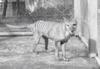
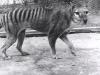
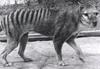
The colourised Fleay film features the last captive thylacine. We see the thylacine lying down, walking around the perimeter of the small enclosure, opening its mouth wide, sniffing the air and scratching.

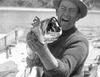
Naturalist David Fleay with a bird on his shoulder and another sitting on his hand

Naturalist David Fleay, c.1933. Courtesy: Rosemary Fleay Thomson and the David Fleay Natural History Collection.

Fleay, a conservationist who advanced the breeding of endangered species in captivity, was bitten on the buttocks after shooting the film. At just under 80 seconds, Fleay's footage is the longest single film of the 10 separate thylacine films known to exist.

The NFSA scanned the original film negative using a Scanity HDR (High Dynamic Range) film scanner and sent Ultra High Definition ProRes files to Samuel in Paris. Samuel's team then commenced extensive research before embarking on the colourisation process.

Samuel writes:

'For the thylacine, I faced a different kind of challenge – and responsibility. I had to take care of the rare filmed footage and pay tribute to the last representative of a species, which disappeared 85 years ago.

'I care a lot about animals and discovered the story of the thylacine while I was living in Australia in 2012, and it really moved me.'

Colourising Challenges

'The 4K scan provided by the NFSA was absolutely stunning for a 35mm negative from 1933, though it was very challenging to colourise because, apart from the animal, there were few elements in the frame.

'And because of the resolution and quality of the picture, there were a lot of details – the fur was dense and a lot of hair had to be detailed and animated.

'Regarding the colourisation choices, we could find many different skins in different museums that were well conserved in the dark and kept their colours.'

As well as original skins preserved in museums, Samuel's team had to rely on sketches and paintings because of the lack of original colour pictures or footage that could be used for research.

Written descriptions of the thylacine's coat gave them a general idea of the tints and shades present in the fur, information they supplemented with scientific drawings and recent 3D colour renderings of the animal.

'From a technological point of view, we did everything digitally – combining digital restoration, rotoscoping and 2D animation, lighting, AI algorithms for the movement and the noise, compositing and digital grading.

'More than 200 hours of work were needed to achieve this result.'

Want to read more like this? Subscribe to rewind and rediscover.

Sign up for In Focus - our email newsletter curating Australia’s audiovisual heritage. Delivered straight to your inbox every month.

National Threatened Species Day

Later footage of the thylacine, who died on 7 September 1936, was also filmed in the same enclosure in March 1935 and can be seen here in black-and-white:

The last known footage of a thylacine (Tasmanian Tiger), from Tasmania the Wonderland, 1935.

National Film and Sound ArchiveAER3DMVM

The higher quality of the earlier Fleay footage made it better suited to colourising than the 1935 footage above. You can read more about how researchers Branden Holmes, Gareth Linnard and Mike Williams from the Tasmanian Tiger Archives discovered the 1935 clip within a forgotten travelogue, Tasmania the Wonderland.

National Threatened Species Day is now commemorated across Australia on 7 September – the date that the thylacine died in captivity – to raise awareness of plants and animals at risk of extinction.

Samuel writes, 'I am very happy and proud to pay tribute to the thylacine on this special day. I hope this project will help to communicate and raise awareness of plants and animal species at risk of extinction.'

Samuel François-Steininger is Art Director at Composite Films, Paris. With thanks to C Campbell from the Natural Worlds Thylacine Museum website for gathering and providing such important and rare informations about the thylacine.

More by Simon

Collections to explore

  • 1930s

  • Hobart

  • Tasmania

  • Start your own collection

    A free Your Stuff account allows you to save, organise and share your favourite videos, audio and stories.

More in Stories+

Personalized your experience

Save, create and share

With NFSA Your Stuff