All about the NFSA
The practice of audiovisual archiving is ever evolving – and so is our institution.
All about the NFSA
The practice of audiovisual archiving is ever evolving – and so is our institution.
What is the NFSA?
The National Film and Sound Archive is one of Australia’s national cultural institutions. It is headquartered in Canberra alongside peers such as the National Gallery of Australia, National Library of Australia, National Museum of Australia and National Portrait Gallery.
It is charged with the collection and preservation of all kinds of recorded sound and moving image: an exciting challenge in the age of new and constantly changing online platforms and genres such as video gaming, podcasts and virtual reality.
Why it matters
In recent years, audiovisual media have moved to the centre of contemporary culture. They provide entertainment and learning, social connection and self-expression, the news and evolving forms of art. And they are everywhere. In every household, bus stop, handbag and trouser pocket there are screens and speakers waiting to inform, distract and delight – mobile and on demand.

The NFSA collects and preserves a vast range of items.
Audiovisual archiving is a relatively recent cultural practice. Recording and playback technologies have only been with us for the past five generations – libraries have been around for centuries, paintings and sculptures even longer. It’s a practice that combines the cataloguing rigour of the library with the historical responsibility of the archive, the selective sensibility of the gallery, and the preservation and interpretation techniques of the museum. At the same time, as a key player in Australia’s media industries, we operate within dynamic commercial and copyright frameworks. And now that artefacts can be digitised for preservation, we can be a new content service for Australians via digital platforms, opening up access to the collection through YouTube, social media and the website you are visiting right now.
How it works
Our staff is correspondingly diverse in skill and focus.
Our curators constantly build the collection, acquiring new artefacts that represent both Australian culture and the evolving nature of audiovisual media and technologies. They maintain partnerships with producers, broadcasters, streamers, academics and independent artists, and conduct research to identify historical gaps in the collection to be filled as well as to keep abreast of future trends. Curators also lead signature programs such as NFSA Restores, which brings classic Australian films back to life using digital technology, and Sounds of Australia, our ongoing celebration of iconic Aussie audio.

Inside one of NFSA’s warehouses in Canberra, which house hundreds of hours of celluloid film.
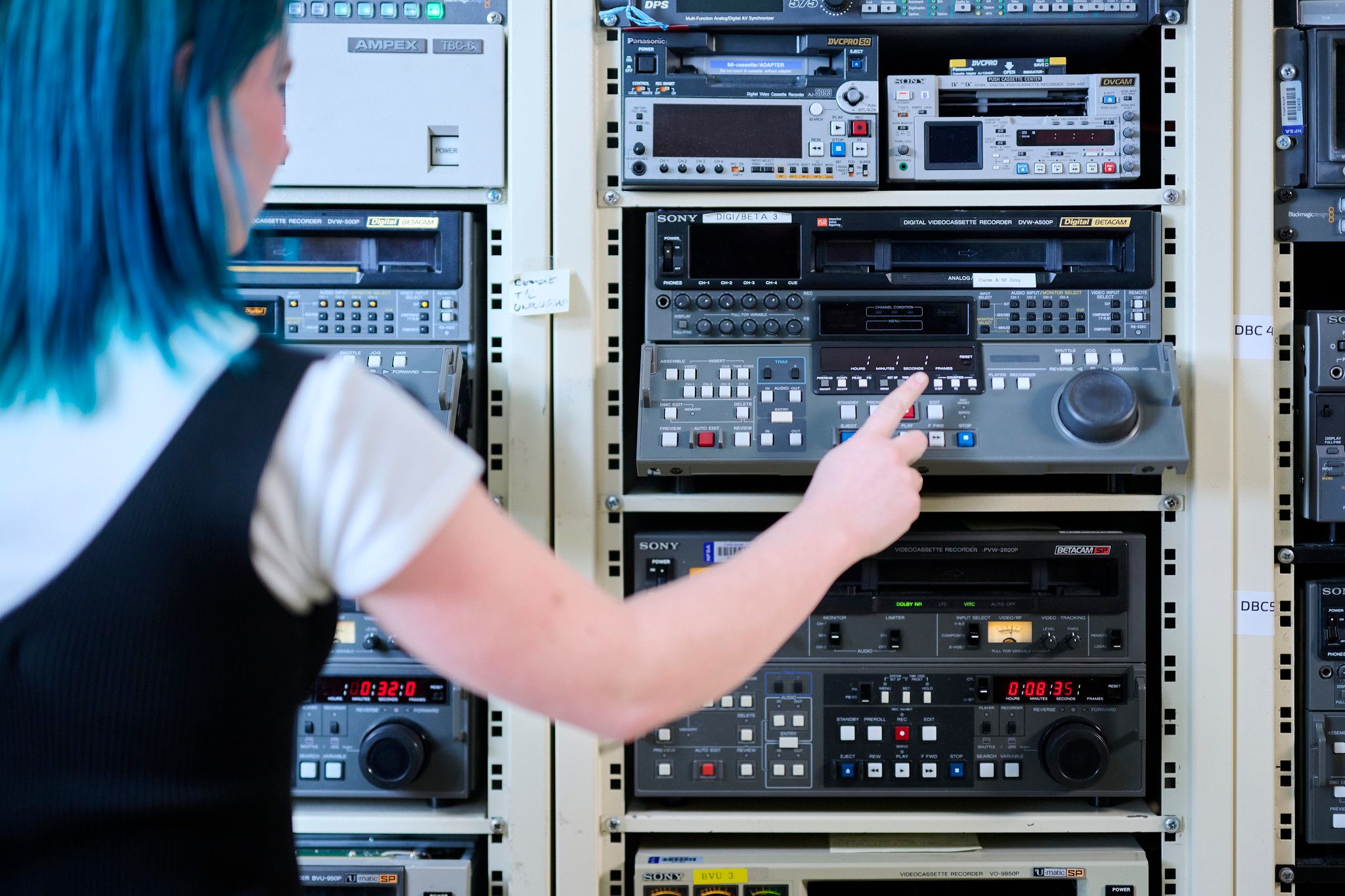
Our preservationists maintain extensive warehouses in the Australian Capital Territory for physical artefacts like vinyl records and celluloid film, as well as data centres to house preservation files. Conservationists are responsible for the restoration and care of items to ensure their long-term protection. Over 30 staff are currently dedicated towards digitising heritage artefacts, which not only preserves them but makes them radically more discoverable and accessible.
As well as collaborating across the organisation on collecting, storytelling and preservation, our First Nations Engagement team leads investigations into our Aboriginal and Torres Strait Islander collection materials and works to return these to their communities of origin where they can be used for knowledge transfer and revitalisation of culture and language. You can read more about the team’s important and exciting work – such as the Central Desert Aboriginal Men’s Digitisation Project – in the First Nations Engagement section of this website.
Our Enterprises team works with Australian producers, academics, content creators and researchers, facilitating access to the collection and assisting with rights inquiries. You probably see and hear NFSA collection materials all the time without knowing it when they are re-used by broadcasters, documentary makers, museums and galleries, or licensed to platforms such as Kanopy, DocPlay and ClickView.
Our content creators and marketers are busy ensuring the collection is as widely used as possible by all Australians, growing audiences by publishing stories and clips to social media, streaming platforms, NFSA Player, and right here at nfsa.gov.au. Appetite for archival content is growing rapidly, and the national audiovisual collection offers plenty of opportunities for entertainment, education and the exploration of Australia’s distinctive and complex national identity across time.
Our public programs team keeps the doors open at our headquarters in Canberra, where visitors can enjoy temporary audiovisual exhibitions and installations, select objects from the collection on display, and our weekly cinema program, which often features Q&A and panel sessions with guest artists.

The NFSA holds media literacy excursions in Acton.
Did you know that around 155,000 school students visit Canberra, the national capital, each year to learn more about Australian democracy and culture? Our Learning team provides young learners with insights into audiovisual culture and critical lessons around media literacy, building the confidence, criticality and online safety of young people when creating and consuming audiovisual experiences.
Holding the organisation together are our finance, workforce, governance, property and procurement teams. As an Australian Government agency, NFSA is always mindful of the standards expected of the Australian public when it comes to providing value for money and accountability when investing taxpayer dollars into our cultural work.
Finally, our Digital team works across the entire organisation, providing the business systems required to operate, but also innovating in new areas of audiovisual archiving. It is relatively simple to digitise a VHS cassette: it is quite another to work out how to preserve a video game for the next 100 years, given the thousands of files, different controllers and platforms, and vast array of gaming engines involved in gameplay. The team also continually updates and improves search tools to make it easier for more Australians to understand and use the collection, and is at the forefront of the ethical uses of Artificial Intelligence-assisted tools and methods.
We hope you enjoy using our website, whether you are a student, industry professional, researcher or a regular Australian sifting through our shared audiovisual heritage for fun. (And if you want to join in, we also post our job vacancies here!)
Welcome.
.jpg?w=1920&h=1280&auto=format)