We acknowledge Australia’s Aboriginal and Torres Strait Islander peoples as the Traditional Custodians of the land on which we work and live and give respect to their Elders, past and present.

Read our Statement of Reflection

Your Cart

Your cart is empty right now...

Discover what's on
Your Stuff
Lists
No lists found
Create list
List name
0 Saved items
Updated: a few seconds ago
Getting Started
Get started with Your Stuff

A free Your Stuff account allows you to save, list and share your favourite collection items and articles. This account will give you access to Your Stuff, NFSA Player and Pro. You will need to create an additional account for Canberra event tickets.

Confirm
Skip to main content
National Film and Sound Archive of AustraliaNational Film and Sound Archive
National Film and Sound Archive of Australia
National Film and Sound Archive
National Film and Sound Archive of Australia
National Film and Sound Archive

The revolution will be televised

50 years of colour TV

On 1 March 1975, Australian television flickered into a new era – glorious, a bit garish and, honestly, Bruce Gyngell on Australian's embracing colour1998

not before time. While the US had colour TV from the mid-1950s and the UK from 1967, we had to wait until 1975!

The lead-up was pure spectacle: Aunty Jack Colour Day Special1975

‘colour-monster’ panic, last-minute Graham Foster oral history excerpt on colour TVtechnical tweaks, and the small matter of making sure news anchors didn’t look radioactive. It was a revolution in living rooms and on soundstages alike – a shift as thrilling as it was chaotic. Let’s rewind to when the tube went technicolour.

Bye bye grey days

Australians had been hearing it for years – colour TV was coming. But as C-Day closed in, the hype turned electric. Networks fine-tuned their broadcasts, magazines cranked up the buzz and households faced the big question: stick with black-and-white or dive into the dazzling unknown?

The night TV lit up

Bold headlines for a bold new era

Ready for the rainbow?

Read: Adjusting the set

BY ROSE MULREADY

The arrival of colour TV changed everything – lighting, costumes, sets and make-up all had to adapt.

Testing, testing... is this thing on?

Colour TV didn’t just arrive – it had to be tested, tweaked and, in some cases, fought off with comedic force. While broadcasters fine-tuned their signals with hypnotic test patterns, The Aunty Jack Colour Day Special took a more dramatic approach, treating the new era like an existential threat.

The first flickers of colour

Aunty Jack vs the colour monster

Turn up the saturation

Mid-'70s TV cranked everything to eleven. Neon stage lighting, eye-popping outfits and deeply saturated sets made sure no one missed the shift. For Australian audiences, it was a wild new way to watch – louder, brighter and impossible to ignore.

Saturday morning got louder

Chequerboard chaos and neon nightmares

A sunshine kind of day

A powerhouse in green sequins

Selling the future

Colour TV was here, and manufacturers wasted no time convincing Australians to make the switch. From glossy ads to magazine competitions, every trick in the marketing playbook was deployed to sell the thrill of full-spectrum viewing. For those still holding onto black-and-white, the message was clear: upgrade or miss out.

A whole new world (of colour)

Colour TV: seen in print

A clown, a TV and a sales pitch

Win big, watch bigger

From black-and-white to bright

Sanyo sweetens the deal

Do you dream in colour?

I was about 8 or 9. We were the first house in the street to have colour TV. People would come over to our house to watch ads so when they went home, they could remember the colours.

I think it made Aussies realise and appreciate how beautiful our country was with shows like 'The Leyland Brothers', 'Jack Absalom's Outback' and 'Alby Mangels’ Adventure World'.

I remember watching 'The Six Million Dollar Man' during a late-shift tea break at work on black-and-white. That night, I was discussing a plot twist with my girlfriend. She pointed out that the guy in the blue shirt was the villain, a colour cue I’d missed.

I can't believe it's been only 50 years. I feel like it should be longer. I do remember not being interested in watching anything that wasn’t colour. Scary movies were scarier when red blood dripped down the screen instead of greyish ooze.

We only had a black-and-white TV. But when I first saw a colour television, I was walking along the main street of Goulburn, looking in the window of an appliance store. Stopped me dead in my tracks upon seeing colour for the first time. Wow, the colour – even through the big pane glass window.

Before C-Day was even on the horizon, Australian TV’s biggest stars were already experimenting with colour – some more successfully than others. At the 1968 Royal Melbourne Show, GTV 9 (Nine Network) introduced The King himself, Graham Kennedy, as the ‘King of Colour.’ In true Kennedy fashion, he took the job literally, slapping three bold stripes of paint onto a white wall – completely missing the mark on how colour television actually worked. It was messy, ridiculous and a fitting preview of the future of Australian television.

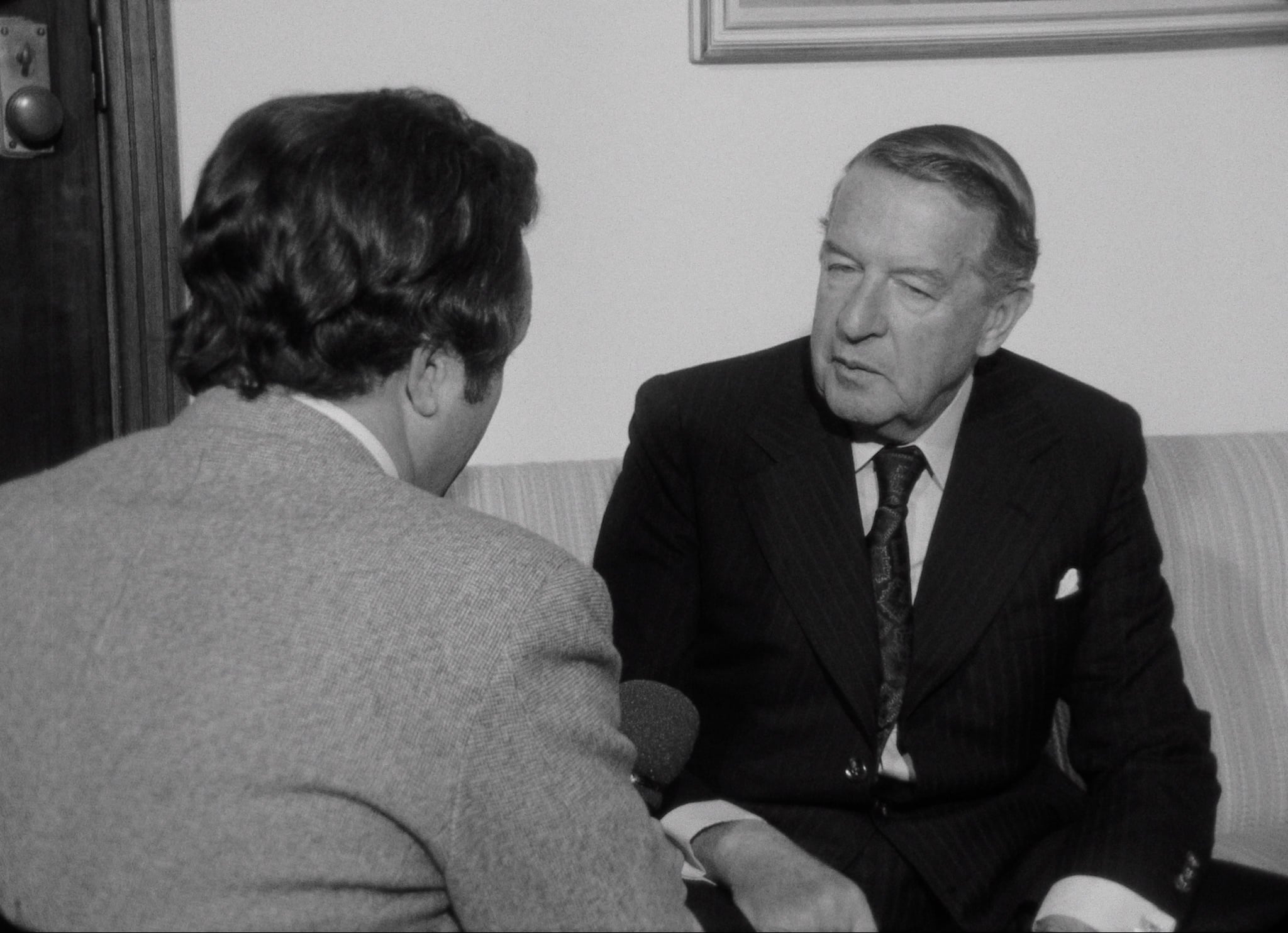
'You do look rather funny in colour, I must say'

- Sir Eric Pearce to 'The King of Colour', Graham Kennedy

Before C-Day was even on the horizon, Australian TV’s biggest stars were already experimenting with colour – some more successfully than others. At the 1968 Royal Melbourne Show, GTV 9 (Nine Network) introduced The King himself, Graham Kennedy, as the ‘King of Colour.’ In true Kennedy fashion, he took the job literally, slapping three bold stripes of paint onto a white wall – completely missing the mark on how colour television actually worked. It was messy, ridiculous and a fitting preview of the future of Australian television.

Six years before C-Day, GTV 9 Melbourne (Nine Network) gave lucky audiences a sneak peek at the future. In a special test film screened at the 1968 Royal Melbourne Show, some of Australia’s biggest TV personalities – including Bert Newton, Hal Todd, and Mike Walsh – stepped into colour for the very first time. The transition may have been gradual for viewers at home, but for those on screen, it was immediate. Newton summed it up best: for the first time, he wasn’t in black-and-white.

'Nice to be with you in colour, this is the first time that I've not been in black-and-white.'

- Bert Newton

Six years before C-Day, GTV 9 Melbourne (Nine Network) gave lucky audiences a sneak peek at the future. In a special test film screened at the 1968 Royal Melbourne Show, some of Australia’s biggest TV personalities – including Bert Newton, Hal Todd, and Mike Walsh – stepped into colour for the very first time. The transition may have been gradual for viewers at home, but for those on screen, it was immediate. Newton summed it up best: for the first time, he wasn’t in black-and-white.

Big business, big scams

Whitlam bangs the gong

Beware the TV tricksters

More collection highlights

Read NFSA curator Bronwyn Barnett's two-part history of Colour TV in Australia and view more highlights in the links below.

Olympics in colour

Channel Seven's colour television demonstration with Percy the Penguin

Manufacturing colour TVs

Credits

Curatorial: Tara Marynowsky, Bronwyn Barnett,
Siobhan Dee, Simon Smith
Multimedia producer: Rachael Priddel
Feature article: Rose Mulready
Editorial: Kate Scott
Licensing and Rights: Anna Yates
Digital producer: Mel Bondfield

With thanks to

Nine Network
Cinesound Movietone Productions
Seven Network

Rewind and rediscover.

Enjoy surprising and moving moments from Australia’s screen and sound history with In Focus – delivered straight to your inbox every month.

Personalized your experience

Save, create and share

With NFSA Your Stuff