Snakes and Ladders: Medicine
1987
Snakes and Ladders: Medicine
1987
- NFSA IDY0DMQMX5
- TypeFilm
- MediumMoving Image
- FormDocumentary
- Year1987
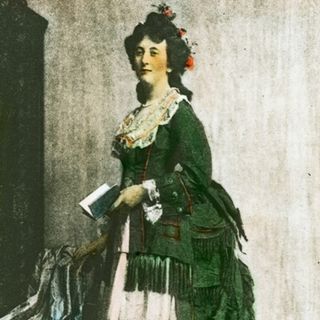
Sophia Whist (Robin Laurie) opens the pages of her evidence book and imparts the story of women’s historical exclusion from medical practice. Marjory Thomas talks about the difficulties faced by Jessie Freeman, one of the first women to study medicine at Sydney University. Summary by Adrienne Parr.
Sophia Whist (Robin Laurie) opens the pages of her evidence book and imparts the story of women’s historical exclusion from medical practice. Marjory Thomas talks about the difficulties faced by Jessie Freeman, one of the first women to study medicine at Sydney University. Summary by Adrienne Parr.
- NFSA IDY0DMQMX5
- TypeFilm
- MediumMoving Image
- FormDocumentary
- Year1987
- Production companyWisteria FilmsProduced and directed byTrish FitzSimons, Mitzi GoldmanOriginal screenplay byTrish FitzSimons, Robin Laurie, Mitzi GoldmanOriginal music composed byShirley Billing
Robin Laurie, now a well-known theatre director, had been an original member of Soapbox Circus and Circus Oz. Sophia uncovers pages in the book of evidence (designed by Julie Cunningham who also did all the film’s animation sequences) and performs the role of a 16th century English bishop. She reveals how women, who commonly practised healing throughout the Middle Ages, were systematically excluded from medicine in the centuries that followed.
In Australia, it wasn’t until the early 1900s that universities admitted any women to their medical faculties. The 94-year-old Dr Marjory Thomas graduated from medicine at Sydney University during the First World War and, fortunately for her, women doctors were welcomed into the fraternity out of need. Marjory tells the story of Jessie Freeman (more commonly known as Jessie Aspinall). Jessie graduated from medicine at Sydney University in 1906 and was appointed as the first female medical resident at RPAH. However the hospital’s board immediately refused to confirm her appointment. Marjory talks about the media and public outrage the action provoked. This was largely sparked after Jessie’s father wrote a long letter to the Sydney Morning Herald on 9 February 1906. Eventually the board capitulated, but determined that her appointment was ‘not to be taken as a precedent’.
Snakes and Ladders synopsis
Combining interviews, historical footage, quirky dramatisations and short animations, Snakes and Ladders gives an account of the achievements and setbacks of Australian women attempting to gain education equality in the 20th century.
Snakes and Ladders curator's notes
Snakes and Ladders was undertaken by two young women filmmakers, Mitzi Goldman and Trish FitzSimons, with the assistance of the Women’s Film Fund. Looking at the history of women and higher education in Australia, the film states at the outset that such a history could by no means follow a linear trajectory of barrier shattering achievements. Rather, the history has been a ‘shifting landscape’, where gains have been contingent on complex social, economic, demographic and class related factors.
To this end the film uses the device of a character, Sophia Whist, played by the inimitable Robin Laurie (who also collaborated with Goldman and FitzSimons on the screenplay). Sophia Whist, in a pair of emblematic red shoes, unearths a book of evidence and weaves her way through the film in a series of vignettes. She pieces together the fragments of information – interviews and historical material, and when official visual record is lacking, animations and little dramatisations. Stories, largely previously untold, of women overcoming what now seem extraordinary obstacles, in order to gain access to higher learning, are related. Sophia’s vignettes are amusing, but just as amusing are some of the historical gems they conduit – like the 1894 quote from a leading gynaecologist warning that women with ‘the capacity for higher mental attainments’ risk their nervous systems developing at the expense of their bodies and thus subsequent infertility; or the 1960s television advertisement literally begging ‘bored housewives’ to make use of their education and return to the workforce as teachers.
Sophia’s segments are hinged to a set of interviews, shot specifically for the film. The subjects are Anne Summers, Linda Burney (who gives an Indigenous woman’s perspective), Bessie Mitchell, Edna Ryan, Marjory Thomas, Jean Curthoys, Marie de Lepervanche and a group of high school girls. The interviews are compelling. The women, whose ages range from 16 to 94, speak frankly and openly about their education experiences. Anecdotes and theoretical assessments are conveyed with equal ease and clarity. A national story of success and defeat unfolds and the history of education is reframed to include the little battles fought by women in the halls of the nation’s institutions of higher learning. The film is a great eye-opener for Australian women – who today take their right to equality in education largely for granted.
Notes by Adrienne Parr
Need to license this item? A/V professionals and researchers can shortlist licensing enquiries via our NFSA Pro catalogue search and membership.
Collections to explore
Australian women
Schools and universities

First Nations
Start your own collection
A free Your Stuff account allows you to save, organise and share your favourite videos, audio and stories.