The Redfern Story
2014

The Redfern Story
2014
- WARNING: Aboriginal and Torres Strait Islander viewers are advised that the following program may contain images and/or audio of deceased persons
In the late 1960s and early 1970s, the Sydney suburb of Redfern became home to over 20,000 Aboriginal people. With the gradual revoking of the reserve system in New South Wales, Aboriginal people drifted to the city looking for friends, family and work.
Redfern, then a run-down slum where only the poorest people lived, was the cheapest and therefore most affordable place for these displaced country people to find refuge. It was soon overcrowded: poverty, illiteracy and alcohol provoked anti-social behaviour and conflict arose between the new inhabitants and the police.
In 1967 the overwhelming 'yes' vote in the Referendum gave Aboriginal people hope that their plight would be recognised and help provided. A few brave pioneers, like Faith Bandler and Kath Walker (Oodgeroo Noonuccal), worked hard to raise awareness but little changed.
Then, in 1971, a small group of untrained but passionate and talented activists came together and formed the National Black Theatre, which became a focal point for activism until it closed in 1977.
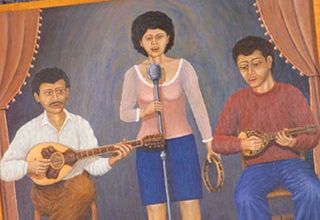
The Redfern Story documents the efforts made through activism and theatre to bring the cause of Aboriginal people to public notice, as a first step towards gaining land rights and better treatment. With theatre, dance and song as powerful political tools, Redfern became a thriving and vibrant melting pot of politics, art and creativity.
Filmmaker Darlene Johnson lived in Redfern as a small child in the 1970s. Her mother was part of the arts and activist scene, and Darlene often sat at the table while music was played and discussions took place about Aboriginal politics. The Redfern Story is her tribute to that time.
- WARNING: Aboriginal and Torres Strait Islander viewers are advised that the following program may contain images and/or audio of deceased persons
In the late 1960s and early 1970s, the Sydney suburb of Redfern became home to over 20,000 Aboriginal people. With the gradual revoking of the reserve system in New South Wales, Aboriginal people drifted to the city looking for friends, family and work.
Redfern, then a run-down slum where only the poorest people lived, was the cheapest and therefore most affordable place for these displaced country people to find refuge. It was soon overcrowded: poverty, illiteracy and alcohol provoked anti-social behaviour and conflict arose between the new inhabitants and the police.
In 1967 the overwhelming 'yes' vote in the Referendum gave Aboriginal people hope that their plight would be recognised and help provided. A few brave pioneers, like Faith Bandler and Kath Walker (Oodgeroo Noonuccal), worked hard to raise awareness but little changed.
Then, in 1971, a small group of untrained but passionate and talented activists came together and formed the National Black Theatre, which became a focal point for activism until it closed in 1977.
The Redfern Story documents the efforts made through activism and theatre to bring the cause of Aboriginal people to public notice, as a first step towards gaining land rights and better treatment. With theatre, dance and song as powerful political tools, Redfern became a thriving and vibrant melting pot of politics, art and creativity.
Filmmaker Darlene Johnson lived in Redfern as a small child in the 1970s. Her mother was part of the arts and activist scene, and Darlene often sat at the table while music was played and discussions took place about Aboriginal politics. The Redfern Story is her tribute to that time.
- Director and writerDarlene JohnsonProducersSue Milliken and Darlene JohnsonProduction CompanyCAAMA Productions Pty Ltd
Need to license this item? A/V professionals and researchers can shortlist licensing enquiries via our NFSA Pro catalogue search and membership.
Collections to explore

Sydney
2010s

First Nations
Start your own collection
A free Your Stuff account allows you to save, organise and share your favourite videos, audio and stories.


