Jedda: Marbuck's madness
1955
Jedda: Marbuck's madness
1955
- NFSA IDTQR2Q4B3
- TypeFilm
- MediumMoving Image
- FormFeature Film
- Duration1 hr, 25 mins
- GenresIndigenous themes or stories
- Year1955
- WARNING: Aboriginal and Torres Strait Islander viewers are advised that the following program may contain images and/or audio of deceased persons
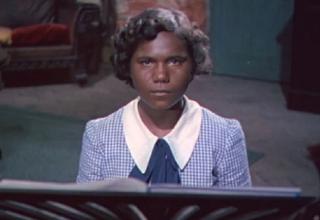
Marbuck (Robert Tudawali) and Jedda (Ngarla Kunoth) are in a cave. Marbuck, gradually losing his mind, begins to hallucinate. After being sung by the older men for breaking tribal laws, Marbuck believes he is dying. Jedda is panicked. How will she survive in this land if Marbuck dies? She will die also. This gives Marbuck the idea to kill Jedda so that he may live, for if Jedda dies, Marbuck has broken no laws.
- WARNING: Aboriginal and Torres Strait Islander viewers are advised that the following program may contain images and/or audio of deceased persons
Marbuck (Robert Tudawali) and Jedda (Ngarla Kunoth) are in a cave. Marbuck, gradually losing his mind, begins to hallucinate. After being sung by the older men for breaking tribal laws, Marbuck believes he is dying. Jedda is panicked. How will she survive in this land if Marbuck dies? She will die also. This gives Marbuck the idea to kill Jedda so that he may live, for if Jedda dies, Marbuck has broken no laws.
- NFSA IDTQR2Q4B3
- TypeFilm
- MediumMoving Image
- FormFeature Film
- Duration1 hr, 25 mins
- GenresIndigenous themes or stories
- Year1955
- CuratorRomaine Moreton
A moment that brings the narrative to conclusion; what is the consequence of breaking white man’s laws, tribal laws and the attempted assimilation of a member of what is promoted as a very old race, in one lifetime? The descent into madness, the punishment for Marbuck breaking tribal laws, sees both Marbuck and Jedda – the tribal black and the partly assimilated black – in a moral and cultural no man’s land. The climax of the film speaks of the inhospitable land, as well as the futility of attempting to assimilate Aboriginal people.
Jedda (1955) is probably Charles Chauvel’s best film, as well as his last. It is historic both for being the first colour feature film made in Australia, but more importantly, because it is arguably the first Australian film to take the emotional lives of Aboriginal people seriously.
Need to license this item? A/V professionals and researchers can shortlist licensing enquiries via our NFSA Pro catalogue search and membership.
Collections to explore

First Nations

1950s

Jedda
Start your own collection
A free Your Stuff account allows you to save, organise and share your favourite videos, audio and stories.


