We acknowledge Australia’s Aboriginal and Torres Strait Islander peoples as the Traditional Custodians of the land on which we work and live and give respect to their Elders, past and present.

Read our Statement of Reflection

Your Cart

Your cart is empty right now...

Discover what's on
Your Stuff
Lists
No lists found
Create list
List name
0 Saved items
Updated: a few seconds ago
Getting Started
Get started with Your Stuff

A free Your Stuff account allows you to save, list and share your favourite collection items and articles. This account will give you access to Your Stuff, NFSA Player and Pro. You will need to create an additional account for Canberra event tickets.

Confirm
Skip to main content
National Film and Sound Archive of AustraliaNational Film and Sound Archive
National Film and Sound Archive of Australia
National Film and Sound Archive
National Film and Sound Archive of Australia
National Film and Sound Archive

Ballet Russes dancer views NFSA dance footage

We recently helped Tatiana Leskova, a 95-year-old ballerina, view a Ballet Russes performance from almost 80 years ago.

Written by Amanda Diaz
04 September, 2018
3 minute read

The NFSA was recently able to help a 95-year-old ballerina watch a performance from almost 80 years ago.

Born in Paris to Russian refugees, Tatiana Leskova joined the prestigious Ballet Russes when she was just 16 years old. She visited Australia on her first international tour with the company. With the assistance of our Collection Reference team, Tatiana was able to view a 1939 performance of Schéhérazade, a ballet inspired by the first tale of The Thousand and One Nights.

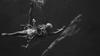
Schéhérazade performed by the Ballet Russes in Australia (choreography Michel Folkine), 1939. Courtesy: The Australian Ballet. Please note: this clip is silent.

National Film and Sound Archive0M19YA55

It was dance academic Dr Michelle Potter who approached the NFSA for a copy of the footage. In the late 90s and early 2000s, Dr Potter was the curator of dance for an Australia Council funded initiative called Keep Dancing!, which sought to establish an Australian Dance Collection at the NFSA.

The footage of Schéhérazade was shot by Dr Joseph Ringland Anderson, an ophthalmologist with a love of both filmmaking and ballet. A shy but generous man, he would host Sunday night screenings of the footage in his living room, which the dancers – sitting cross-legged on the floor – would hum along to for musical accompaniment.

‘All the dancers spoke about him because he used to invite them to his home in Melbourne on Sundays to swim and have a meal’, says Dr Potter. ‘Tatiana was one of the dancers who visited, and knew of the footage as a result.’

Preserving dance on film

Throughout her long career, Tatiana has staged ballets from that era all around the world. Although she herself was not one of the dancers seen in the 1939 footage (she did not arrive in Australia until New Year’s Day, 1940), she was curious to see how Schéhérazade had been danced during the Ballet Russes period, as she had never been happy with how it was staged in later years. One of the first things she noticed when watching the footage was how good it looked.

‘It was a surprise to see the quality and the colours that Dr Anderson could obtain at the time it was filmed’, she says.

In viewing the clip, Tatiana found herself enjoying the performance of the two principal dancers – Tamara Grigorieva and Serge Grigorieff. Most of all though, she admired the choreography of legendary Russian dancer and choreographer Michel Fokine. As one of the last remaining dancers to have performed with the Ballet Russes, she wishes dance companies today showed more respect for Fokine’s work.

‘I regret that Fokine’s ballets are almost all forgotten’, she says. ‘The few still performed have such modified choreography and style.’

Dr Potter says that the Ballets Russes companies that toured Australia between 1936 and 1940 were very important for the future development of dance in this country.

‘Dance is a non-verbal art and, as such, little remains of the actual performance after it has been performed’, she says. ‘This kind of footage is the one way in which we can see what important works in the ballet-dance repertoire were like.’

Collections to explore

More in Stories+

Personalized your experience

Save, create and share

With NFSA Your Stuff