We acknowledge Australia’s Aboriginal and Torres Strait Islander peoples as the Traditional Custodians of the land on which we work and live and give respect to their Elders, past and present.

Read our Statement of Reflection

Your Cart

Your cart is empty right now...

Discover what's on
Your Stuff
Lists
No lists found
Create list
List name
0 Saved items
Updated: a few seconds ago
Getting Started
Get started with Your Stuff

A free Your Stuff account allows you to save, list and share your favourite collection items and articles. This account will give you access to Your Stuff, NFSA Player and Pro. You will need to create an additional account for Canberra event tickets.

Confirm
Skip to main content
National Film and Sound Archive of AustraliaNational Film and Sound Archive
National Film and Sound Archive of Australia
National Film and Sound Archive
National Film and Sound Archive of Australia
National Film and Sound Archive

First Nations Languages at the NFSA

Broadcasting and teaching language

Here are three stories from our collection about recording, broadcasting and teaching First Nations languages.

Written by Chris Arneil
20 March, 2019
3 minute read

Here are three stories from our collection about recording, broadcasting and teaching First Nations languages.

WARNING: this article contains names, images or voices of deceased Aboriginal and Torres Strait Islander people.

Languages in danger

The United Nations General Assembly declared 2019 to be the International Year of Indigenous Languages. The aim was to spotlight the consequences of Indigenous languages being endangered.

Around 120 Aboriginal and Torres Strait Islander languages are still spoken in Australia: that is less than half of the estimated 250 languages thought to have been spoken at the time of European settlement. Many of these languages could be endangered if there is an insufficient number of speakers to sustain them into the future.

Here we present three stories from our collection about recording, broadcasting and teaching Aboriginal and Torres Strait Islander languages.

Songs of survival

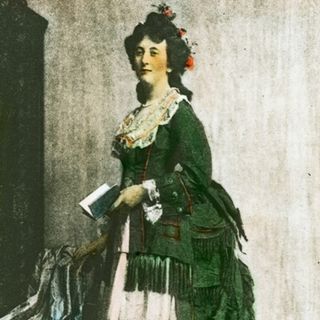
Among the oldest sound recordings of Aboriginal and Torres Strait Islander languages are those made by Fanny Cochrane Smith in Tasmania in 1899.

In 2017, we celebrated the inscription of the 1899 and 1903 Fanny Cochrane Smith Tasmanian Aboriginal recordings into the UNESCO Australian Memory of the World Register.

These are the only sound recordings of Fanny Cochrane Smith (1834–1905), the last known fluent speaker of any of the original Tasmanian Aboriginal languages. Her words and songs provide a unique insight into Tasmanian Aboriginal society, culture and spiritual life:

Invalid url

Fanny Smith talks about being the last of the Tasmanians and sings in both English and her own language.

National Film and Sound ArchiveEG1VDD1Y

For Tasmanian Aboriginal people the Cochrane Smith recordings are songs of survival and represent their ongoing struggle for rights and recognition. They have contributed to a continuing language reclamation project conducted by the Tasmanian Aboriginal Centre, the palawa kani Language Retrieval Program.

The Tasmanian Museum and Art Gallery is the custodian of the recordings, and the NFSA has provided specialist preservation and curatorial services.

Is TV killing languages?

The Australian government’s announcement in 1981 that there would be a national satellite (AUSSAT) encouraged the use of the satellite for Aboriginal peoples in remote areas of Australia.

In this excerpt from the documentary Satellite Dreaming (1991), Freda Glynn and Phillip Batty from CAAMA (Central Australian Aboriginal Media Association) talk about the effect of commercial television being broadcast without restrictions into Aboriginal communities. They are concerned about the harmful effects on communities where an Aboriginal language is the first language spoken:

Excerpt from Satellite Dreaming (Ivo Burum), 1991. Courtesy CAAMA Productions

Living language

This ABC TV news item from the Northern Territory examines the success that Chifley College in Sydney was having in the 2000s in increasing attendance by Aboriginal students through the introduction of Darug language classes. Teacher Richard Green and School Principal Tim Jones talk about the positive effect it has had on all students:

A new program teaches Darug language in western Sydney, ABC News Darwin, 4 December 2007.

National Film and Sound ArchiveYYCR6QGX

This is an engaging and uplifting news story about how an innovative program is having a positive impact on school students in a western Sydney college. It usefully shares the perspectives of multiple people involved, including school staff, students and an Aboriginal elder.

See more stories from our television news and current affairs program, Newscaf.

This article was first published in 2019. The text was updated in 2023.

Collections to explore

More in Stories+

Personalized your experience

Save, create and share

With NFSA Your Stuff