Wirriya: Small Boy - Ricco
2004
Wirriya: Small Boy - Ricco
2004
- NFSA ID40GNW3XK
- TypeTelevision
- MediumMoving Image
- FormSeries
- Duration26 mins
- GenresIndigenous themes or stories, Indigenous as subject
- Year2004
- WARNING: Aboriginal and Torres Strait Islander viewers are advised that the following program may contain images and/or audio of deceased persons
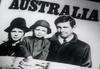
At school, Ricco stands with his hands drooped over an outside freshwater tap. He introduces himself to the audience, and the other main characters of the documentary soon after. Summary by Romaine Moreton.
- WARNING: Aboriginal and Torres Strait Islander viewers are advised that the following program may contain images and/or audio of deceased persons
At school, Ricco stands with his hands drooped over an outside freshwater tap. He introduces himself to the audience, and the other main characters of the documentary soon after. Summary by Romaine Moreton.
- NFSA ID40GNW3XK
- TypeTelevision
- MediumMoving Image
- FormSeries
- Duration26 mins
- GenresIndigenous themes or stories, Indigenous as subject
- Year2004
- Production companyCAAMA ProductionsProducersCitt Williams, Beck ColeExecutive ProducerCitt WilliamsDirectorBeck ColeAcknowledgementsProduced with the assistance of the Indigenous Branch of the Australian Film Commission
Seven-year-old Ricco Japaljarri Martin introduces himself at Hidden Valley, an Aboriginal town camp near Alice Springs. As Ricco introduces them, we see footage of his nine dogs, his Nanna and three sisters. The kids play on playground equipment.
Ricco (voice-over, with English subtitles) My name is Ricco. I am 7 years old. I come from Hidden Valley. Hidden Valley is near Alice Springs. It is a town camp for Aboriginal peoples. I have nine dogs. Their names are Michael 1, Michael 2, Cindy, Wink Wink, Ringo, Blacky, Rocky, Tommy, and one named Lu-Lu. I live with Nanna Maudie. Maudie is my foster mother, but I call her Nanna. My sisters are Rochelle, Delena and Charmaine. They are helpful. They share, you know, share feeds.Sitting outside her house, Nanna Maudie talks about her family. There is footage of the kids playing and riding pushbikes.
Nanna Maudie (voice-over, with English subtitles) We just all mixed-up tribe living here. We just live together friendly way. There’s a lot of grandmothers looking after grandchildren. Yeah. It’s a big problem. Me, I only just looking after my two grandchildren. Those two big girls. And those two little ones, two foster ones. Charmaine, she from Yuendumu way, Nyrripi way. Well, I’m looking after her. I grow her up. I’m her foster mother now. And Ricco, he’s from Tennant Creek, that little boy. Father from Tennant Creek, mother from Willowra.Ricco leaves his pushbike to climb over the fence and board the waiting school bus.
A delightful introduction to Ricco, who narrates the majority of this narrative, sharing the voice-over only with his foster mother Nanna Maudie.
Wirriya: Small Boy Synopsis
An observational documentary about Ricco Japaljarri Martin, an eight-year-old boy who lives in Hidden Valley with his foster mother.
Wirriya, Small Boy is part of the Nganampa Anwernekenhe series produced by Central Australian Aboriginal Media Association (CAAMA) Productions. Nganampa Anwernekenhe means 'ours’ in the Pitjantjatjara and Arrernte lanuages, and the series aims to contribute to the preservation of Indigenous languages and cultures.
Wirriya: Small Boy curator's notes
A sensitive documentary that is narrated predominantly by Ricco himself, and is an example of a respectful treatment of the Indigenous subject. Beck Cole is a respected Indigenous filmmaker, and her experience allows for a poignant invitation into Ricco’s world, his childish perspective kept intact by Cole’s skilful handling of the story. We are present to Ricco’s emergent conceptual world, where the perceived geographical remoteness of his homeland is pushed up alongside the larger world; one where travel to distant places and foreign lands is all part of Ricco’s everyday life and experience.
Beck Cole puts a face to what would otherwise be an unknown statistic of an Aboriginal foster child. Instead, we are privileged to learn of Ricco’s dreams and aspirations, and a child who at this moment, still looks towards a future. Beck Cole’s other productions include Plains Empty (2004) and Flat (2002).
Notes by Romaine Moreton
Education Notes
This clip shows 7-year-old Ricco Japaljarri Martin introducing himself at Hidden Valley (also known as Ewyenper-Atwatye), an Indigenous Australian town camp near Alice Springs in the Northern Territory. Ricco also introduces his extended family and his nine dogs. As children play on playground equipment, Ricco reflects in a voice-over on how helpful his sisters are to him. Sitting outside her house, Nanna Maudie explains that Hidden Valley is made up of 'mixed up tribes’ living together in a 'friendly way’, and that a lot of grandmothers are looking after their grandchildren. The clip concludes with Ricco boarding a school bus. The clip includes English subtitles.
Educational value points
- This clip is from the observational documentary Wirriya: Small Boy, which explores an ordinary day in the life of Ricco Japaljarri Martin. Released in 2004, the film was produced, written and directed by respected Indigenous Australian filmmaker Beck Cole. It was shot over a 2-month period on a mini-DV camera at Hidden Valley, a small Indigenous community on the outskirts of Alice Springs in central Australia. Ricco provides most of the film’s narration in a warm and intimate account of his family and aspirations.
- Writer, producer and director Beck Cole is a graduate of the Australian Film, Television and Radio School (AFTRS). Her debut drama, Flat, screened at the Sundance and Edinburgh Film Festivals in 2004. In Wirriya: Small Boy, Cole skilfully and sensitively portrays a day in the Ricco’s life and presents the audience with a unique view of an isolated Indigenous Australian community through the eyes of a child. Beck Cole worked closely with the community and gained rare access to the town in telling Ricco’s story.
- The scenes in this clip are situated in Hidden Valley town camp, one of 18 well-established communities for Indigenous peoples around Alice Springs. Town camps have certain characteristics that make them radically different from suburban neighbourhoods. The land that town camps occupy is traditional tribal territory, and Indigenous Australian community committees manage most aspects of their operation with government support.
- This extract raises the issue of family breakdown in Indigenous Australian communities. Nanna Maudie acknowledges that family breakdown is a 'big problem’ for remote Indigenous Australian communities and that many grandparents care for children when family breakdown occurs. The causes of these breakdowns are complex and generational and include multiple layers of trauma caused by the large-scale removal of Indigenous Australian children from their families, poverty, disadvantage and a lack of access to social services.
- Wirriya: Small Boy is a film made with support from the Central Australian Aboriginal Media Association (CAAMA). Established 25 years ago, CAAMA promotes Indigenous Australian culture, language, dance, and music and educates the wider community about the richness and diversity of the Indigenous peoples of Australia. In 2005, Film Australia presented CAAMA with the 2005 Stanley Hawes Award for Outstanding Contribution to Australian Documentary.
- Wirriya: Small Boy is an example of an 'observational documentary’ style of filmmaking. The effect of the observational approach is that the documentary maker’s point of view is not paramount in the film. Rather than listen to a narrator telling Ricco’s story, viewers listen to Ricco and members of his community telling their own stories against the backdrop of their everyday lives.
Education notes provided by The Learning Federation and Education Services Australia
Need to license this item? A/V professionals and researchers can shortlist licensing enquiries via our NFSA Pro catalogue search and membership.
Collections to explore
Babies and children
Family tradition
Parenting
Start your own collection
A free Your Stuff account allows you to save, organise and share your favourite videos, audio and stories.


