Submariners: Training underwater
2005
Submariners: Training underwater
2005
- NFSA IDX57GDV3R
- TypeTelevision
- MediumMoving Image
- FormDocumentary
- Duration26 mins
- Year2005
Commanding officer Steve Hussey conducts training exercises on board the Collins-class submarine HMAS Rankin. During these exercises, a real emergency engulfs the crew when a leaky exhaust valve fills the area with smoke.
Commanding officer Steve Hussey conducts training exercises on board the Collins-class submarine HMAS Rankin. During these exercises, a real emergency engulfs the crew when a leaky exhaust valve fills the area with smoke.
- NFSA IDX57GDV3R
- TypeTelevision
- MediumMoving Image
- FormDocumentary
- Duration26 mins
- Year2005
- DirectorHugh PiperProducerAndrew OgilvieWriterHugh PiperOriginal conceptGreg ColganOriginal MusicKeith Van Geyzel and Tim CountCommissioning EditorNed Lander
This clip starts approximately 10 minutes into the documentary.
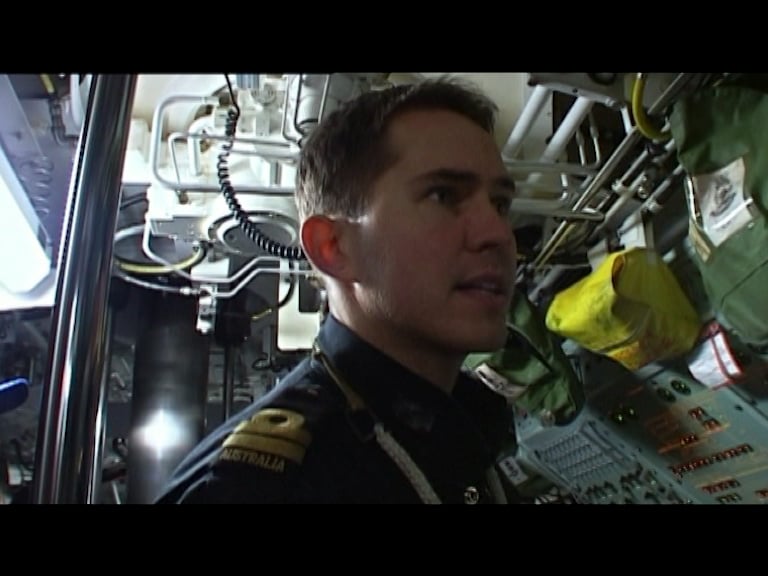
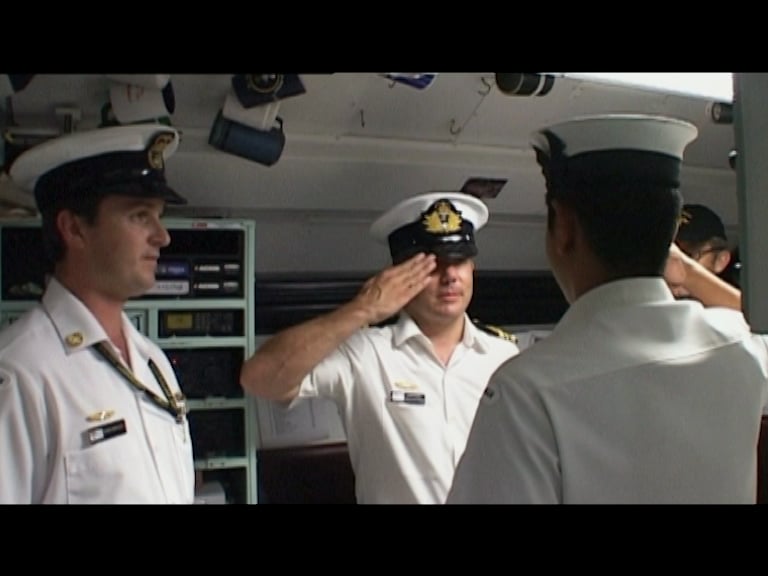
Commanding officer Steve Hussey is shown sitting at his desk. In voice-over, he reads from his diary. Then scenes of the crew participating in a training exercise are shown before the exercise turns into a real emergency when leaking exhaust fumes poison the atmosphere in the engine room. In the control room officers communicate the ship’s status to each other and suit up to avoid the effects of the toxic gas.
Steve Hussey, commanding officer With Hawaii still one week away, I’m raising the intensity of our training. We’ll be exercising with the US maritime forces before reaching Pearl Harbour and, after a period alongside, the RIMPAC war games commence. With this in mind, the XO is running a series of exercises designed to focus the crew on the task at hand.Overlapping voices of sailors preparing
Officer 1 All compartments brace for shock.
Officer 2 30 metres, 10 down. Keep – 45 metres. Open fore main ballast tank flood valve.
Officer 3 Louder! We can’t hear you. Stop blowing main ballast.
Officer 4 Open external vent valves.
Officer 5 Open external vent valves, aye Sir – one, two, three, four, five, six. Main ballast. External ballast switched over.Narrator-filmmaker Senior sailors wearing blue hats are assessing the crew’s performance under pressure. But then it all turned real. Leaking exhaust fumes poisoned the atmosphere back aft in the engine room.
Sequence of sailors putting on masks and dealing with the leak
Narrator It took two hours before the gas was cleared and the boat returned to normal.This clip shows the commanding officer of the Collins-class submarine HMAS Rankin, Steve Hussey, on board the submarine. In voice-over, Hussey reads from his diary of the time and tells of his plans to step up the crew’s training before they reach Pearl Harbor, Hawaii. Scenes of the crew participating in a training exercise, overseen by senior sailors, are shown before the exercise turns into a real emergency when leaking exhaust fumes poison the atmosphere in the engine room.
Educational value points
- The clip is from the six-part documentary series Submariners (2005), which followed the crew of HMAS Rankin, a Collins-class submarine manufactured in Australia, as they prepared for naval exercises with the US Navy. Series director Hugh Piper and cameraman Paul Warren spent two weeks over four months on board the Rankin. They filmed 233 hours of tape on Sony PD170 miniDV cameras, with the footage then edited to 3 hours of television. Another camera crew filmed members of the submarine crew’s families to provide insight into the experience of the families left behind.
- A sense of danger and suspense is well conveyed through the use of hand-held cameras, the combination of shouted orders, ambient sound effects and rhythmic music, close-ups of the action and, at times, a jerky camera. When the exhaust valve leak occurs the music speeds up and is overlaid with sound effects such as breathing in a gasmask to suggest the urgency of the situation.
- The series was devised to give insight into life on board an Australian submarine deployed overseas and the clip displays the cramped, noisy and claustrophobic conditions of submarine life. Series director Hugh Piper found the crew of HMAS Rankin to be a tightly knit group, interdependent and highly skilled.
- A typical day on a submarine is divided into four 6-hour slots, or watches, with most of the crew divided into two watches that each have 6 hours on and 6 hours off. The on-watch crew operate their equipment while the off-watch crew eat, sleep, read, study, watch television or use the limited fitness facilities. The crew, usually comprising about 45 people, are away from their families for lengthy periods, leading to strain on the families. The divorce rate among submariners is estimated to be as high as 80 per cent.
- The Swedish-designed, Australian-built Collins-class submarine was one of the first submarines to be completely designed using computers and tailored specifically for the defence and surveillance role of the Royal Australian Navy. The roles of the submarines include undersea warfare, surveillance and intelligence gathering, support for special forces and covert transport of troops and equipment.
- The six Collins-class submarines in the Royal Australian Navy were initially severely criticised for being too noisy, for their engines breaking down regularly, and for having periscopes with blurred images, an outdated communications system and a badly designed hull and fin. According to naval spokespeople these problems have now been fixed and the submarines can match those of the US Navy. The submarines are based at HMAS Stirling on Garden Island in Western Australia.
- The clip shows the crew practising for the then upcoming naval exercises with the US Navy, a military joint activity operating under the security treaty between Australia, New Zealand and the USA (ANZUS). The ANZUS treaty was signed on 1 September 1951 and bound the participating countries to recognise that an armed attack in the Pacific or on any one of them would endanger the peace and safety of the others, to consult with each other in the event of a threat and to maintain and develop individual and collective capabilities to resist attack.
- The Collins-class submarines are considered a key element of Australia’s defence force for intelligence gathering, for use in peacekeeping and war and as a deterrent against any hostile forces. In 2006 a Senate Foreign Affairs, Defence and Trade Committee found that there were compelling reasons, including being an island nation situated in the Asia–Pacific region, for Australia to have a navy capable not only of defending its shores but also of ensuring the safety of surrounding areas.
- The director of the Submariners series, Hugh Piper, has also made A Case for the Coroner, a six-part series for the ABC about the workings of the Coroner’s Court, and The Post, about the reporters on Cambodia’s English-language newspaper the Phnom Penh Post.
By Damien Parer
This television series looks at the life of the crew on board the Collins-class submarine HMAS Rankin. It is an intimate portrait of the personalities and skills of the 65 submariners from the commanding officer, Steve Hussey, to the steward Chris McLarty.
Need to license this item? A/V professionals and researchers can shortlist licensing enquiries via our NFSA Pro catalogue search and membership.
Collections to explore
.jpg?w=100&h=75&auto=format)

Documentary
.jpg?w=100&h=75&auto=format)
.jpg?w=100&h=75&auto=format)
.jpg?w=100&h=75&auto=format)
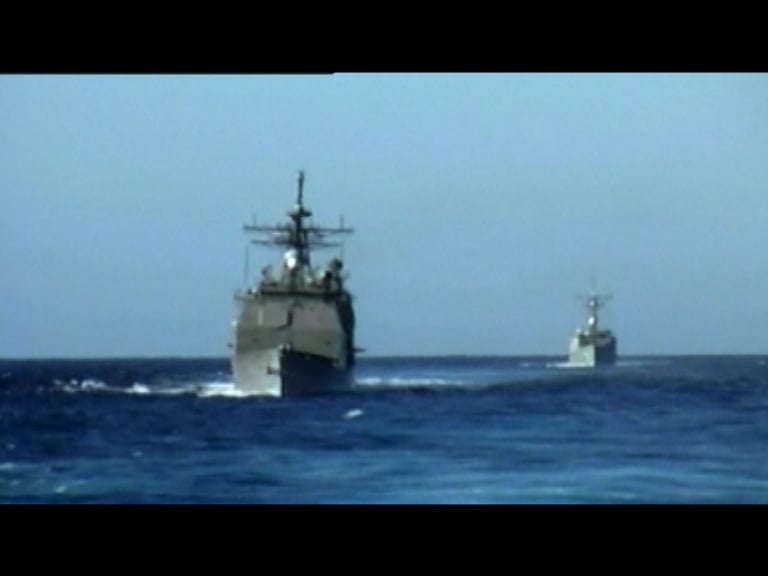
Navy


2000s
Start your own collection
A free Your Stuff account allows you to save, organise and share your favourite videos, audio and stories.
.jpg?w=640&h=480&auto=format)

.jpg?w=640&h=480&auto=format)
.jpg?w=640&h=480&auto=format)
.jpg?w=640&h=480&auto=format)


.jpg?rect=4,0,760,576&w=640&h=485&fit=min&auto=format)
.jpg?rect=4,0,760,576&w=640&h=485&fit=min&auto=format)
