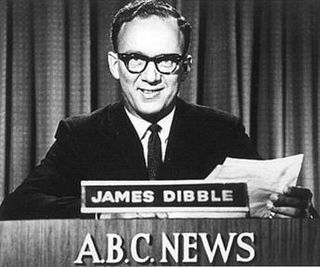
Newsfront: Propaganda or news?
1978
Newsfront: Propaganda or news?
1978
- NFSA IDK5J0TSCR
- TypeFilm
- MediumMoving Image
- FormFeature Film
- GenresHistorical, Drama
- Year1978
Film editor Geoff (Bryan Brown) makes a political joke, and a statement, by tampering with a newsreel to make fun of the newly-elected Prime Minister, Mr Menzies. His conservative boss, AG Marwood (Don Crosby), is not amused. Summary by Paul Byrnes.
Film editor Geoff (Bryan Brown) makes a political joke, and a statement, by tampering with a newsreel to make fun of the newly-elected Prime Minister, Mr Menzies. His conservative boss, AG Marwood (Don Crosby), is not amused. Summary by Paul Byrnes.
- NFSA IDK5J0TSCR
- TypeFilm
- MediumMoving Image
- FormFeature Film
- GenresHistorical, Drama
- Year1978
- Production companyPalm Beach PicturesProducerDavid ElfickAssociate ProducerRichard BrennanDirectorPhillip NoyceScreenplay byPhilippe Mora, David Elfick, Bob Ellis, Phillip NoyceOriginal musicWilliam MotzingCastAlexander Archdale, Tony Barry, Bryan Brown, John Clayton, Don Crosby, John Dease, John Ewart, Drew Forsythe, Chris Haywood, Mark Holden, Wendy Hughes, Bill Hunter, Gerard Kennedy, Lorna Lesley, Angela Punch McGregor (AKA Angela Punch)
A newsreel entitled ‘Democracy at Work: LIB–CP Coalition wins election; Menzies speaks’ plays on screen.
Newsreel narrator After eight years in office under the leadership of, first, Prime Minister Curtin and then Mr Chifley, the Australian Labor Party has been defeated at the polls by Mr Menzies’s new Liberal-Country Party Coalition.
Cinetone newsreel studio boss AG Marwood and several employees are previewing the newly-completed newsreel in a theatrette.
Chris (to Len) He looks like a big kangaroo, doesn’t he?
Newsreel narrator Mr Chifley seen here voting. Mr Menzies casts his choice.
Among the employees is film editor Geoff. On screen we see Menzies walking and waving to the crowd but the newsreel has been tampered with so that Menzies walks back and forth waving over and over. Geoff and his colleagues laugh.
AG Marwood You may think it’s funny. Stop it there will you Macca?
The lights come up.
Marwood I’m astonished at you Geoff for imagining that a piece of bad taste like that was worth your time, my disappointment in you, and the money I’m going to dock from your pay for the ingenious processing work.
Geoff Oh, come on!
Marwood Astonished. Absolutely astonished!
Len It was a joke, AG.
Geoff And something of a political statement.
Marwood Just because after nine years of well-nigh traitorous incompetence we now have a government capable of getting us out of the mess your friends got us into…
Geoff After the Brisbane line, you’re calling Chifley traitorous?
Marwood A government that maybe even will put the film industry back on its feet.
Len We’ve all heard that before.
Marwood Will you listen to me when I’m talking to you! I still have some authority around here.
Geoff We never said you didn’t.
Marwood In my day, people had respect for those who had the goodness to employ them when nobody else would.
Geoff sighs heavily and looks down.Interesting for the depiction of the post-production process on newsreels, and the heady political atmosphere in which they were made. The politicisation of the home and workplace, the way it was a real factor of daily life, is one of the film’s major themes.
Newsfront synopsis
In Australia in the late 1940s, before the coming of television, Len Maguire (Bill Hunter) and his young sidekick Chris (Chris Haywood) cover the big news stories for the Cinetone newsreel company. An old-school cameraman, Len is loyal to the company, the Australian Labor party and the Catholic church, but times are changing. He struggles to maintain his principles in turbulent times.
Newsfront curator's notes
Newsfront is a classic, a contender for the best film ever made in Australia. It documents a period of intense social and political turmoil, personalising the propaganda wars of the late 1940s, the rise of Robert Menzies and a politicised Catholic church, and the beginnings of feminism in the workplace – all with extensive use of real newsreels.
The film’s most original technique is the way it integrates new and old footage, shifting effortlessly between black-and-white and colour, sometimes in the same scene. This gives the film great immediacy, a sense that history is alive in the present.
Off-screen, the production is famous for behind-the-scenes arguments between writer Bob Ellis, writer–director Phillip Noyce and producer David Elfick. After they made extensive cuts, Ellis removed his name from the credits, a decision he later regretted. A restored DVD release now includes commentary from all three, in which Ellis says he now recognises it as amongst the best work he has done.
Notes by Paul Byrnes
Education Notes
This clip shows the production team from the fictitious Cinetone newsreel company reviewing a newsreel that trumpets the electoral victory of the Liberal–Country Party coalition led by Robert Menzies. The clip uses black-and-white archival footage from a real newsreel within the fictional world of the film. Studio boss AG Marwood (Don Crosby) is unimpressed when a shot of a smiling and waving Menzies is successively repeated on the newsreel and lectures the film editor, Geoff (Bryan Brown), about his immaturity and the benefits of a Menzies Liberal–Country Party government.
Educational value points
- Newsreels were a chief source of news prior to the introduction of television in 1956 and were shown in cinemas before the feature film. In some theatres newsreels were screened continuously. In the 1930s and 1940s the cinema program included an international newsreel and either the locally produced Australian Movietone News or Cinesound Review. The Newsfront scenes depicting 'Cinetone’, the fictitious newsreel company, were filmed in the disused Sydney studios of 'Cinesound’. The film’s studio boss, AG Marwood, was based on a leading Australian filmmaker Ken G Hall AO OBE (1901–94), who led Cinesound Productions from 1931 to 1956.
- The clip raises the issue of propaganda in newsreels. There has been much debate about the degree to which newsreels reflected or shaped public opinion. In 1937 the editor of the Motion Picture Herald argued that newsreels should simply be entertaining and 'have no obligation to be important [or] informative’. Director Phillip Noyce may be commenting on this when he has Geoff editing the newsreel to make Menzies appear comical, with the original newsreel footage heralding Menzies’s victory as 'Democracy at Work’.
- Robert Gordon Menzies (1894–1978) was Australia’s longest-serving prime minister and founder of the Liberal Party. He led the country from 1939 to 1941 and again from 1949 until his retirement in 1966. In 1949 Menzies led the newly formed Liberal Party to victory and formed a coalition with the Country Party (renamed the National Country Party in 1975 and the National Party in 1982). During his second period in office, Menzies presided over Australia’s longest period of prosperity and high living standards.
- The clip makes reference to Menzies’s 1949 election campaign. Menzies’s victory was bitterly resented by many on the left of politics because he ran a scare campaign alleging that the Australian Labor Party’s plans to nationalise banks, communications and transport would lead to socialism, and linked the party to communism. Menzies later attempted to ban the Communist Party in Australia through a referendum in 1951, but failed.
- Ben Chifley (1885–1951), leader of the Australian Labor Party (ALP) and prime minister from 1945 to 1949 is shown in the clip. Known as 'a man of the people’, Chifley, a former railway worker, was elected to Federal Parliament in 1928. He was appointed treasurer in the Curtin government in 1941 and became Prime Minister when Curtin died in office in 1945. He led the ALP to victory in the 1946 election. However, in the 1949 election, Menzies’s scare campaign, based around the fear of communism, and mounting public dissatisfaction with continuing wartime austerity measures caused a huge swing against Labor.
- The clip raises issue of the Brisbane Line controversy. In 1942 allegations surfaced that, early in the Second World War, the then conservative government led by Menzies and later Arthur Fadden, had devised a defence strategy called the 'Brisbane Line’. If Japan invaded, it was claimed, a line would have been drawn from Adelaide to Brisbane and the territory north of this line would have been evacuated and abandoned to the Japanese, allowing a military defence of the more industrialised and populous south-eastern part of Australia. The claim was never proved but it led to the defeat of the conservative opposition at the 1943 federal election.
- Newsfront launched the career of director Phillip Noyce, who directed and co-wrote it in 1978. It was his second feature film, and was a commercial and critical success. An acclaimed filmmaker, Noyce has worked both in Australia and overseas. Among the films to his credit are Rabbit-Proof Fence (2002), Patriot Games (1992), Dead Calm (1989) and Heatwave (1982). Newsfront also helped establish actors such as Bill Hunter, Bryan Brown, Wendy Hughes and Chris Haywood.
Education Notes provided by The Learning Federation and Education Services Australia
Need to license this item? A/V professionals and researchers can shortlist licensing enquiries via our NFSA Pro catalogue search and membership.
Collections to explore

News bulletin

1950s

Investigative journalism
Start your own collection
A free Your Stuff account allows you to save, organise and share your favourite videos, audio and stories.