Jimmie Barker collections: Jimmie Barker
1971
Jimmie Barker collections: Jimmie Barker
1971
- WARNING: Aboriginal and Torres Strait Islander viewers are advised that the following program may contain images and/or audio of deceased persons
Murawari man Jimmie Barker was the first known First Nations Australian to use recorded sound as a tool to preserve and document Aboriginal culture. His pioneering work produced over 100 hours of audio recordings across 21 collections, now preserved by the Australian Institute of Aboriginal and Torres Strait Islander Studies (AIATSIS).
Jimmie Barker (1900–1972) grew up on Mundiwa, an Aboriginal reservation on the Culgoa River in New South Wales, before moving to ‘Milroy’ sheep station with his mother Maggie and younger brother Billy. As a boy at Milroy, Barker undertook his own pioneering experiments in electricity generation and sound recording. He later moved to Brewarrina Mission Station.
In the late 1960s, the Australian Institute of Aboriginal Studies (AIAS, later AIATSIS) initiated a recording project with Barker. Many of these recordings (made between 1968 and 1972) include Barker’s detailed descriptions of, and reflections upon, what he refers to as ‘the old ways’.
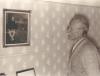
In this clip from 1971, Barker talks about the early recordings he made of Murawari man Clyde Marshall (also known as King Clyde) speaking a local Ngemba dialect. Barker had begun recording residents of the Brewarrina Mission in the 1920s to preserve their traditional songs and language and his recordings represent a crucial link with pre-colonial Muruwari and Ngemba culture.
Explore more of the Jimmie Barker collections in the Pretty Little Lines online exhibition on the AIATSIS website.
- WARNING: Aboriginal and Torres Strait Islander viewers are advised that the following program may contain images and/or audio of deceased persons
Murawari man Jimmie Barker was the first known First Nations Australian to use recorded sound as a tool to preserve and document Aboriginal culture. His pioneering work produced over 100 hours of audio recordings across 21 collections, now preserved by the Australian Institute of Aboriginal and Torres Strait Islander Studies (AIATSIS).
Jimmie Barker (1900–1972) grew up on Mundiwa, an Aboriginal reservation on the Culgoa River in New South Wales, before moving to ‘Milroy’ sheep station with his mother Maggie and younger brother Billy. As a boy at Milroy, Barker undertook his own pioneering experiments in electricity generation and sound recording. He later moved to Brewarrina Mission Station.
In the late 1960s, the Australian Institute of Aboriginal Studies (AIAS, later AIATSIS) initiated a recording project with Barker. Many of these recordings (made between 1968 and 1972) include Barker’s detailed descriptions of, and reflections upon, what he refers to as ‘the old ways’.
In this clip from 1971, Barker talks about the early recordings he made of Murawari man Clyde Marshall (also known as King Clyde) speaking a local Ngemba dialect. Barker had begun recording residents of the Brewarrina Mission in the 1920s to preserve their traditional songs and language and his recordings represent a crucial link with pre-colonial Muruwari and Ngemba culture.
Explore more of the Jimmie Barker collections in the Pretty Little Lines online exhibition on the AIATSIS website.
Need to license this item? A/V professionals and researchers can shortlist licensing enquiries via our NFSA Pro catalogue search and membership.
Collections to explore
Start your own collection
A free Your Stuff account allows you to save, organise and share your favourite videos, audio and stories.