Has Jim Morrison Closed The Doors?
1971
Has Jim Morrison Closed The Doors?
1971
- NFSA IDMYGFBFSC
- TypeRadio
- MediumAudio
- FormSpoken word
- Year1971
Fond of a pun, Lillian Roxon’s background as a tabloid journalist shows in the headline for this radio story, ‘Has Jim Morrison Closed The Doors?’.
This piece is a fine example of Roxon’s seemingly effortless ability to impress listeners with the depth of her knowledge about the history and interconnections within the world of rock, even in this short two-minute format.
Turning name-dropping into an art form she manages to highlight the connections between diverse figures such as Jim Morrison, writer Richard Goldstein, photographer (and her ex-best friend) Linda Eastman (later Linda McCartney), Beatle Paul McCartney, television personality Ed Sullivan and singer Judy Collins.
Her role as a friend and confidant to the stars, in conjunction with her confident delivery, succeeds in creating the impression that she is the gatekeeper to all the behind-the-scenes gossip – including what Morrison is up to now.
Her writing style is very down to earth and conversational which is a reminder that she is first and foremost a fan of underground music and wishes to keep in touch with what other music lovers are into.
Morrison died in Paris on 3 July 1971, just months after this story was recorded.
This is an episode of the radio show Discotique – a two-minute ‘daily newscast from the world of music’ syndicated on 250 radio stations in the United States.
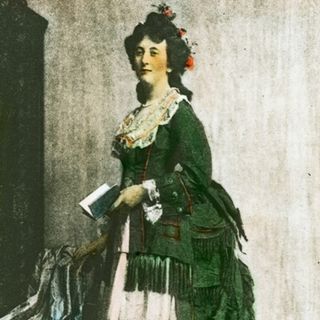
The cover image for this title comes from a promotional photo of The Doors. Photo: Elektra Records-Joel Brodsky. This is an iconic image of The Doors and became all-the-more-so after Morrison's untimely death at the age of 27. The character of the band, along with Morrison's slightly unhinged look and confident sexual appeal, are evident from the image.
Notes by Beth Taylor
Fond of a pun, Lillian Roxon’s background as a tabloid journalist shows in the headline for this radio story, ‘Has Jim Morrison Closed The Doors?’.
This piece is a fine example of Roxon’s seemingly effortless ability to impress listeners with the depth of her knowledge about the history and interconnections within the world of rock, even in this short two-minute format.
Turning name-dropping into an art form she manages to highlight the connections between diverse figures such as Jim Morrison, writer Richard Goldstein, photographer (and her ex-best friend) Linda Eastman (later Linda McCartney), Beatle Paul McCartney, television personality Ed Sullivan and singer Judy Collins.
Her role as a friend and confidant to the stars, in conjunction with her confident delivery, succeeds in creating the impression that she is the gatekeeper to all the behind-the-scenes gossip – including what Morrison is up to now.
Her writing style is very down to earth and conversational which is a reminder that she is first and foremost a fan of underground music and wishes to keep in touch with what other music lovers are into.
Morrison died in Paris on 3 July 1971, just months after this story was recorded.
This is an episode of the radio show Discotique – a two-minute ‘daily newscast from the world of music’ syndicated on 250 radio stations in the United States.
The cover image for this title comes from a promotional photo of The Doors. Photo: Elektra Records-Joel Brodsky. This is an iconic image of The Doors and became all-the-more-so after Morrison's untimely death at the age of 27. The character of the band, along with Morrison's slightly unhinged look and confident sexual appeal, are evident from the image.
Notes by Beth Taylor
- NFSA IDMYGFBFSC
- TypeRadio
- MediumAudio
- FormSpoken word
- Year1971
- WriterLillian RoxonPresenterLillian RoxonProduction companySyndicated AirTime
Lillian Roxon (1932–1973) was an Australian journalist who lived in New York in the 1960s and 70s. Dubbed ‘the mother of rock’, she wrote the iconic Lillian Roxon's Rock Encyclopedia, which was published in 1969.
In the 1970s Roxon documented the emerging rock revolution and later the birth of punk from her haunt – the New York city music club Max’s Kansas City – which was frequented by Iggy Pop, Andy Warhol, Lou Reed, Debbie Harry, Alice Cooper, Jimi Hendrix and David Bowie.
During 1971 she wrote and presented a show called Discotique – a two-minute ‘daily newscast from the world of music’. The shows, which ran from March to October 1971, were recorded and then pressed onto vinyl LPs (20 shows fitted onto one LP) and syndicated on 250 radio stations in the United States. At the time, her voice would have been a curiosity for listeners unaccustomed to hearing Australian accents.
Roxon died tragically at the age of 41 from a severe asthma attack.
The Discotique recordings in our collection date from 28 June to 23 July 1971 and appear on an LP that the Roxon family donated to the NFSA in 2013. Given Roxon’s significance to the history of rock music, Radio Archivist Maryanne Doyle had long been looking for radio recordings of Roxon reporting on the music scene.
Maryanne first heard about the Discotique recordings thanks to Robert de Young, producer of the documentary Mother of Rock, about Roxon’s life. Mother of Rock (2010) is preserved in the NFSA collection as part of the National Documentary Program funded by Screen Australia.
Notes by Beth Taylor
Need to license this item? A/V professionals and researchers can shortlist licensing enquiries via our NFSA Pro catalogue search and membership.
Collections to explore

Rock music
Australian women
Journalist
Start your own collection
A free Your Stuff account allows you to save, organise and share your favourite videos, audio and stories.