Grandad Rudd: Shickered
1935
Grandad Rudd: Shickered
1935
- NFSA IDJ78SBF6B
- TypeFilm
- MediumMoving Image
- FormFeature Film
- Year1935
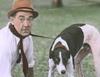
Grandad Rudd (Bert Bailey) and Mr Banks (Bill Stewart) leave the pub in a state of complete inebriation. Mr Banks offers Mr Rudd a lift on his horse. Back at the Rudd household, Mrs Banks (Marie D’Alton) and her daughter Amelia (Molly Raynor) drink tea with the assembled Rudds. Mrs Banks espouses the ‘Band of Hope’, a temperance union, as Grandad and Mr Banks roll up in a ‘horse and car’, completely ‘shickered’. Summary by Paul Byrnes.
Grandad Rudd (Bert Bailey) and Mr Banks (Bill Stewart) leave the pub in a state of complete inebriation. Mr Banks offers Mr Rudd a lift on his horse. Back at the Rudd household, Mrs Banks (Marie D’Alton) and her daughter Amelia (Molly Raynor) drink tea with the assembled Rudds. Mrs Banks espouses the ‘Band of Hope’, a temperance union, as Grandad and Mr Banks roll up in a ‘horse and car’, completely ‘shickered’. Summary by Paul Byrnes.
- NFSA IDJ78SBF6B
- TypeFilm
- MediumMoving Image
- FormFeature Film
- Year1935
- Production companyCinesound Productions and Bailey and GrantProducersKen G Hall, Bert BaileyDirectorKen G HallScreenplayVictor Roberts, Gordon ParkerFrom the play byBert BaileyAdapted from stories bySteele RuddAcknowledgementsCinesound-Movietone Productions owns all copyright which may subsist in this footage
Some lovely acting by Bert Bailey and Bill Stewart, as comical drunks. Younger viewers may be puzzled by several aspects of this scene – the idea of a temperance union, the use of horses as a normal mode of transport, and words like ‘shickered’, which are barely part of popular language anymore. Audiences at the time would have understood them clearly. The ‘pledge’ – a vow of abstinence from alcohol – was a common undertaking at the time. Young people came under strong pressure to avoid all contact with alcohol – although as the Rudd boys make clear, there were many who viewed the whole thing with suspicion and ridicule.
Grandad Rudd synopsis
The battling pioneer settler Dad Rudd (Bert Bailey) has now become a grandfather and a prosperous grazier, but no less careful with his money. His sons Dave (Fred MacDonald), Joe (William McGowan) and Dan (George Lloyd) do most of the farm work, for meagre wages, while enduring their father’s insults and tyranny. Egged on by their wives, the sons storm up to the big house, threatening to leave. Grandad Rudd initially grants them a wage increase, then raises their rent by an equal amount. When eldest grandchild Betty (Elaine Hamill) announces her intention to marry a shifty neighbour, Henry Cook (John D’Arcy), Grandad Rudd joins forces with her suitor, Tom Dalley (John Cameron) to unmask Cook as a liar and an ex-convict.
Grandad Rudd curator's notes
Grandad Rudd was made quickly in late 1935, after the box office failure of Ken Hall’s fourth feature at Cinesound, Strike Me Lucky. Hall hated making failures, so Grandad Rudd was an attempt to repeat the great box office success of On Our Selection (1932) and The Squatter’s Daughter (1933), his first two films. Grandad Rudd was indeed a reasonable financial success, although it isn’t one of Hall’s best films. There’s a lot of amiable slapstick humour, but not much of a story. Hall devotes little effort to characterisation, beyond the character of old Mr Rudd himself – played again by Bert Bailey – but this time the old curmudgeon is barely likeable. He bullies his sons and their wives, he’s a miser and a drunk and something of a professional grump. His children aren’t much better. Prodigal son Dan tells his other two brothers that he’s ‘stopping round ‘ere till ‘e pegs out, to get me share, the same as you’.
Much of the film is taken up with comical sketches that reduce the film’s emotional effectiveness. Many of these are the old-fashioned silent film-style routines that Hall had yet to leave behind, even in 1935, seven years after the coming of sound. Still, some of these sketches are beautifully put together to entertain audiences who were desperate for a good laugh, in the midst of the Depression. The drunken routine in the film is a series of well-timed gags that owe a lot to vaudeville, but Hall makes good use of dialogue too, as the two men prattle on while trying to ride a horse. These scenes are part of a long tradition in Australian cinema of lampooning the wowsers in society – represented in the film by the temperance meeting that the Rudds are uncomfortably hosting when Grandad and his neighbour arrive home.
Notes by Paul Byrnes
Need to license this item? A/V professionals and researchers can shortlist licensing enquiries via our NFSA Pro catalogue search and membership.
Collections to explore


Cricket
Horses
Comedy and satire
Start your own collection
A free Your Stuff account allows you to save, organise and share your favourite videos, audio and stories.


