First Contact: Guns and pigs
1983
First Contact: Guns and pigs
1983
- NFSA IDCVD4YK2P
- TypeFilm
- MediumMoving Image
- FormDocumentary
- Duration54 mins
- Year1983
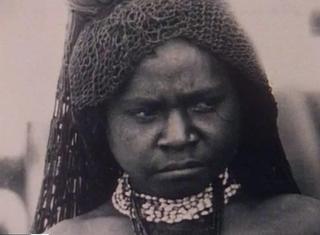
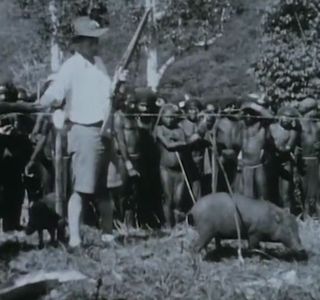
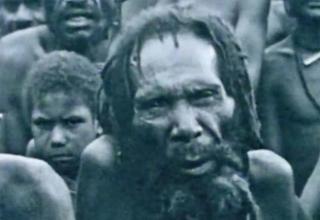
In interview and voice-over, James Leahy recollects the first time the Leahy brothers came across a new community of highlanders. He explains that, fearful of being outnumbered by large numbers of people they could not communicate with, the brothers felt they had to demonstrate their weaponry to show they could protect themselves and their possessions. Historical stills illustrate the numerous highlanders, and footage shot by Michael Leahy in the 1930s shows the Leahys shooting a pig. In interview, two highlanders (Toa and Tupia) who were the Leahys’ ‘gun boys’ (guards) relate how they were instructed by Michael Leahy not to fight or shoot anyone unless one of the Leahys’ men were hit by a spear or arrow. If that happened, then they were to shoot to kill. Summary by Pat Fiske.
In interview and voice-over, James Leahy recollects the first time the Leahy brothers came across a new community of highlanders. He explains that, fearful of being outnumbered by large numbers of people they could not communicate with, the brothers felt they had to demonstrate their weaponry to show they could protect themselves and their possessions. Historical stills illustrate the numerous highlanders, and footage shot by Michael Leahy in the 1930s shows the Leahys shooting a pig. In interview, two highlanders (Toa and Tupia) who were the Leahys’ ‘gun boys’ (guards) relate how they were instructed by Michael Leahy not to fight or shoot anyone unless one of the Leahys’ men were hit by a spear or arrow. If that happened, then they were to shoot to kill. Summary by Pat Fiske.
- NFSA IDCVD4YK2P
- TypeFilm
- MediumMoving Image
- FormDocumentary
- Duration54 mins
- Year1983
- Production companyArundel ProductionsProducersBob Connolly, Robin AndersonAssociate ProducerDick SmithDirectorsBob Connolly, Robin AndersonMusicRon CarpenterCastRichard OxenburghAcknowledgementsMade in association with The Institute of Papua New Guinea Studies and with the assistance of Dick Smith
The archival footage of the highlanders’ reaction to seeing rifle fire for the first time is riveting. They are visually disturbed, fearful and many run away. Throughout the time the Leahys were prospecting, highlanders did get shot and killed or injured when they tried to steal possessions or they attacked the goldminers.
First Contact Synopsis
First Contact is an astonishing documentary about the three Australian Leahy brothers (Michael, Dan and James) who went gold prospecting in what they thought was a completely uninhabited part of the remote Western Highlands of New Guinea. They encountered thousands of highlanders who were seeing ‘white’ men for the very first time. The documentary uses both the footage shot by Michael Leahy in the early 1930s and interviews shot 50 years later with the two surviving Leahy brothers and some of the highlanders who witnessed their coming.
First Contact Curator's notes
Although Robin Anderson and Bob Connolly had made several films together, First Contact was their first major independent documentary. The idea of the film was sparked by a conversation they had with ABC Radio’s Tim Bowden who was working on an oral history project about Australia’s involvement in Papua New Guinea. The filmmakers were intrigued by the Leahy brothers‘ expeditions into uncharted areas in the highlands of New Guinea searching for gold. Robin Anderson set about researching and struck ‘gold’ herself when Michael Leahy’s son, Richard, gave her seven rusty cans of old 16mm film – two hours of footage that documented the ‘first contact’. This material became the basis of First Contact.
Much to the Leahy brothers’ surprise, a million New Guinea tribespeople lived in the remote and mountainous highland area that they had ventured into. The highlanders had no knowledge of the outside world. The Leahys wore clothes, came in airplanes and brought with them shells, steel axes, tools of trade, tin cans, rifles, a 16mm camera and a gramophone. The film explores the memories of the Leahys and the highlanders, and their behaviour and reactions to each other.
First Contact is a complex documentary about cultural contact and confrontation. The documentary at times is surprising, shocking and humorous but overall it is compelling. It is full of paradoxes and contradictions and leaves the viewer to ponder issues of exploitation, greed, desire, racial superiority, colonialism, cultural differences and similarities.
Creating First Contact set the filmmakers on a 10-year journey making a trilogy of films ‘investigating the historical, social and economic factors facing the first peoples of Papua New Guinea and the conflicting values of tribalism and capitalism’. The other two films in the trilogy are Joe Leahy’s Neighbours (1989) and Black Harvest (1992).
First Contact won 10 international awards, including the Australian Film Institute Award for Best Documentary in 1983, the Grand Prix at the prestigious Festival Cinéma du Réel in Paris in 1983 and was nominated for an Academy Award in 1984.
Anderson and Connolly co-wrote a book about their experiences, also called First Contact (1987, Viking Penguin).
First Contact screened in many film festivals around the world before it was broadcast in Australia on Channel 7 in 1983 and then in the US, Canada and countries across Europe.
Notes by Pat Fiske
Education Notes
This clip shows two Australian brothers, the Leahys, demonstrating the power of guns for the first time to people in the Western Highlands of Papua New Guinea (PNG) in the 1930s. The clip includes archival black-and-white photographs and Michael Leahy’s film footage of the newcomers killing a pig to convey the fearsomeness of the gun. It also includes interviews from the 1980s in which James Leahy and Highlanders Toa and Tupia explain that the pig killing was a strategy to ensure the protection of the Leahys and their trading goods. Subtitles are used.
Educational value points
- The clip provides firsthand accounts of contact between Australian gold prospectors and Highlanders in PNG in the early 1930s. There is archival film, photographs and footage of James Leahy and two Highlanders speaking of their earlier experiences. Footage from the 1930s is complemented by a 1983 interview with James Leahy explaining the motivations at the time. The Highlander ‘gun boys’ who were the Leahys’ employees describe the instructions they received about shooting.
- The shooting of the pig is presented as an example of the power of the Australian traders who wanted to convince the Highlanders of their superior strength so that they could prospect for gold safely. James Leahy explains that the Highlanders’ initial fear had quickly changed to a desire for the newcomers’ ‘treasure’ such as knives and axes, and so the traders felt vulnerable. The shooting led to the Highlanders’ fear of the gun as well as an awareness of its limitations.
- Focus on goods such as the steel axe suggests the importance of technology and trade in the experience of first contact between the white traders and the PNG Highlanders in the 1930s. The clip presents the Highlanders’ quick recognition of the value of these new technologies, which could make their clearing of the bush, gardening and building activities easier. Reference to the Highlanders bringing food reveals one of their items for trade.
- In this clip the Leahy brothers are documented as part of a process of colonisation and exploitation of Papua New Guinean resources in the 1930s, but only from their own perspective. The Leahys express 1930s attitudes that presumed their right to prospect for gold in order to build their own wealth. The traders also presumed the right to impose on the Highlanders their ideas about individual ownership of goods and to punish what they regarded as stealing.
- Language in the clip reflects colonial attitudes of the 1930s. In a 1983 interview, two Highlanders who were employed by the Leahys refer to Michael Leahy as ‘Masta Mick’. In the captions they are referred to as ‘gun boys’ irrespective of their ages. They recall Michael Leahy providing instructions about dealing with the ‘wild natives’. The identities of the men are acknowledged but they explain their role without revealing their own views about it.
- In this clip Bob Connolly and Robin Anderson combine a range of visual and sound techniques to create tension around the killing of the pig. The change from still photographs to the 1930s archival film of the pig being killed (which shows men moving rapidly back and children running away) is combined with music and the sudden sound of the gunshot to make the shooting the dramatic focus. Modern interview segments in colour provide background information about the scene.
Education notes provided by The Learning Federation and Education Services Australia
Need to license this item? A/V professionals and researchers can shortlist licensing enquiries via our NFSA Pro catalogue search and membership.
Collections to explore
Music

Academy Awards

1930s
Start your own collection
A free Your Stuff account allows you to save, organise and share your favourite videos, audio and stories.


