Caddie: six o'clock swill
1976
Caddie: six o'clock swill
1976
- NFSA ID3DP3CVYQ
- TypeFilm
- MediumMoving Image
- FormFeature Film
- GenresBiographical, Romance, Drama
- Year1976
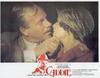
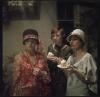
Caddie has taken a job in an inner-city hotel, because it pays more than waitressing, but she’s unprepared for the brutal struggle that is the nightly ‘six o’clock swill’. Men crowd the bar to drink as much beer as possible before the pub closes at 6 pm. There are fights, foul language and men throwing up on the floor. She remembers an earlier encounter with a man when she was in a more genteel occupation, but is rudely returned to the present by a customer.
Summary by Paul Byrnes
Caddie has taken a job in an inner-city hotel, because it pays more than waitressing, but she’s unprepared for the brutal struggle that is the nightly ‘six o’clock swill’. Men crowd the bar to drink as much beer as possible before the pub closes at 6 pm. There are fights, foul language and men throwing up on the floor. She remembers an earlier encounter with a man when she was in a more genteel occupation, but is rudely returned to the present by a customer.
Summary by Paul Byrnes
- NFSA ID3DP3CVYQ
- TypeFilm
- MediumMoving Image
- FormFeature Film
- GenresBiographical, Romance, Drama
- Year1976
- ProducerAnthony Buckley AODirectorDonal CrombieWriterJoan Long
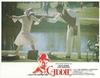
The laws governing opening hours of hotels changed in NSW in 1955, after a referendum in 1954 narrowly voted to extend closing till 10 pm (it took another ten years for the laws to change in Victoria and South Australia). Before then, hotels had to close at 6 pm, which led to scenes that are difficult now to believe. Caddie offers perhaps the most vivid recreation in our cinema of the desperation with which some men drank. There’s a strong sense in this scene that this was ‘no place for a woman’ – but the film also shows that the ladies’ lounge was no place for a lady, either.
The scene makes fantastic use of subjective sound and camera. Note the change in mood from the beginning shot – all welcoming and hearty – to the end, where she is forlorn and exhausted.Caddie synopsis
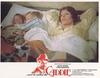
In Sydney in 1925, Caddie (Helen Morse) gets a job as a barmaid, after walking out on an unfaithful husband. She has no money and two children to feed. The working conditions are appalling, but she learns the trade, with help from fellow barmaid Josie (Jacki Weaver). A brief affair with Ted, an SP bookmaker (Jack Thompson), ends badly, but she falls in love with Peter (Takis Emanuel), a charming and sophisticated Greek immigrant, who’s also still married. He is called back to Greece as the Depression hits, but he promises to return soon. Caddie is once again alone, without a job or the money to feed her children. Her struggle continues.
Curator's notes
The identity of the real ‘Caddie’ is still a closely guarded secret. The book upon which the film is based was published in 1953, and was written by a woman who worked one day a week as housekeeper for the writers Dymphna Cusack and Florence James. As they were writing their classic novel of war-time Sydney, Come in Spinner, ‘Caddie’ was writing her memoir, with their encouragement. It took her seven years to complete. Cusack edited the book, but she did not write it, contrary to rumours to that effect. ‘Caddie’ died in 1960, and the book remained popular. Producer Anthony Buckley bought a copy in a Sydney newsagency in the early 1970s and asked writer Joan Long to adapt it.
The resulting film remains one of the highlights of the renaissance of Australian film in the 1970s, for several reasons. It’s a powerfully emotional statement of the ways in which women outside marriage were socially and economically disadvantaged in the period between the wars. Caddie receives no child support from her husband, no welfare payments, and she can’t afford a lawyer to pursue a divorce. The movie is also a vivid depiction of working-class life in the inner city. Caddie leaves a ‘respectable’ home in the suburbs to enter a much less respectable milieu. Having never been in a pub in her life, she is confronted with the horrors of the ‘six o’clock swill’, as desperate men cling to the bar, vomiting and urinating where they stand, rather than lose their place. This was no place for a woman, so by extension, any woman who would work in such a place was considered of low repute.
The film’s masterstroke was to cast Helen Morse, an actress of immense poise and elegance, as a visual contradiction of this idea. Morse plays Caddie as a genteel woman who has fallen on hard times – a change from the more working-class woman of the book. Jacki Weaver’s character is much more at home in a working-class pub, but that doesn’t help her escape ‘a woman’s lot’. One of the film’s most candid and affecting scenes shows Weaver’s character waiting for a miscarriage to take effect, after she has visited a backyard abortionist. The film was made partly with funding from the Australian National Advisory Committee of the International Women’s Year – and it remains a strongly feminist statement – even if directed by a man, Donald Crombie.
Caddie can be seen as part of the loose trilogy of genteel historical films of the 1970s that deal with women freeing themselves – the others being The Getting of Wisdom (1977) and My Brilliant Career (1979), although Caddie is the only one with an urban setting and mostly working-class characters. Helen Morse won the AFI award for best actress for her performance.
Notes by Paul Byrnes
Need to license this item? A/V professionals and researchers can shortlist licensing enquiries via our NFSA Pro catalogue search and membership.
Collections to explore
Helen Morse


1970s

Caddie
Start your own collection
A free Your Stuff account allows you to save, organise and share your favourite videos, audio and stories.


