Breaker Morant: ‘This is what comes of Empire building’
1979
Breaker Morant: ‘This is what comes of Empire building’
1979
- NFSA IDZH2GAXJW
- TypeFilm
- MediumMoving Image
- FormFeature Film
- GenresDrama
- Year1979
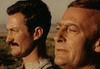
Morant (Edward Woodward) and Handcock (Bryan Brown) march to their executions. Their lawyer, Major Thomas (Jack Thompson) lingers in their makeshift cell – which looks to be a stable – to consider the epitaph that Morant has requested: 'And a man’s foes shall be they of his own household’, taken from Matthew 10:36.
Summary by Paul Byrnes
Jonathan Hardy, David Stevens, Bruce Beresford were nominated for Best Adapted Screenplay (Screenplay Based on Material from Another Medium) at the 1980 Academy Awards.
Morant (Edward Woodward) and Handcock (Bryan Brown) march to their executions. Their lawyer, Major Thomas (Jack Thompson) lingers in their makeshift cell – which looks to be a stable – to consider the epitaph that Morant has requested: 'And a man’s foes shall be they of his own household’, taken from Matthew 10:36.
Summary by Paul Byrnes
Jonathan Hardy, David Stevens, Bruce Beresford were nominated for Best Adapted Screenplay (Screenplay Based on Material from Another Medium) at the 1980 Academy Awards.
- NFSA IDZH2GAXJW
- TypeFilm
- MediumMoving Image
- FormFeature Film
- GenresDrama
- Year1979
- DirectorBruce BeresfordProducerMatt CarrollProduction CompanySouth Australian Film Corporation
The execution scene puts the final polish on the confusion of ironies that the film offers. We have seen these two men murder in cold blood, including a missionary, yet the ending swings sympathy their way, with a profoundly melancholy and beautifully mounted death scene. The question of innocence hangs heavily over the whole film – is it a film about unjust punishment of legitimate warfare, or a defence of war crimes?
Breaker Morant Synopsis
In the Boer War in South Africa in 1901, three Australian 'irregular’ soldiers are tried by a British military court for the murder of 12 prisoners and a German missionary. The accused are Lieutenants Harry Morant (Edward Woodward), Peter Handcock (Bryan Brown) and George Witton (Lewis Fitz-Gerald). Morant, an English-born adventurer who has spent years in Australia, maintains he was following unwritten orders. Their inexperienced Australian lawyer (Jack Thompson) struggles to have his case heard.
Curator's Notes
The trial of Morant, Handcock, and Witton was enormously controversial at the time and remains so, more than 100 years later. The film rekindled the debate in 1980, but was itself attacked over accuracy. The script, based on a play by Kenneth Ross, argues that their trial was fixed from the outset. Lord Kitchener, head of the British forces, is shown agreeing that the soldiers must be sacrificed, in order to keep Germany from joining the war on the Boer side. At the same time, the film shows that the soldiers did kill the prisoners and the missionary. The question is whether these constituted war crimes and whether they got a fair trial.
With the recent war in Vietnam fresh in the public mind, these questions still had strong resonance in 1980. Debate still rages about whether Kitchener ever issued verbal orders to kill prisoners. The film represented Australia in the competitive section of the Cannes Film Festival in 1980. Jack Thompson won the festival’s best supporting actor award.
Notes by Paul Byrnes
Need to license this item? A/V professionals and researchers can shortlist licensing enquiries via our NFSA Pro catalogue search and membership.
Collections to explore
1970s


Feature film
Edward Woodward
Start your own collection
A free Your Stuff account allows you to save, organise and share your favourite videos, audio and stories.


