Australasian Gazette: Patriotic Procession in Aid of the French Red Cross
1915
Australasian Gazette: Patriotic Procession in Aid of the French Red Cross
1915
- NFSA ID8FBHG16M
- TypeFilm
- MediumMoving Image
- FormNewsreel, Series
- Year1915
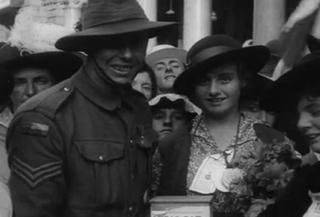
This newsreel segment shows a parade in 1915 for the French Red Cross. People dressed in costumes walk, ride horses or ride in horse-drawn carriages along an inner-city street of Melbourne, Victoria while trams can be seen in the background. This has substantial nitrate damage. Summary by Elizabeth Taggart-Speers.
CURATOR'S NOTES
This Australasian Gazette newsreel has substantial nitrate damage. This means that is difficult to see the entire image. However, what is captured is a record of the strong association Australians have had with the French Red Cross, particularly during the First World War when Australia fought with the Allied Powers, including France to defeat the Central Powers led by the German Empire, Austro–Hungarian Empire and the Ottoman Empire.
Cellulose nitrate, the film base for this newsreel was used until the 1950s. Nitrate was easy to make and tough, however it is extremely flammable and chemically unstable. This newsreel is preserved at the National Film and Sound Archive.
Newsreels were an integral part of cinema programming in Australia before the advent of television in 1956. Issued on a weekly basis, newsreels enabled people to further engage with local and national political stories and events.
Notes by Elizabeth Taggart-Speers
This newsreel segment shows a parade in 1915 for the French Red Cross. People dressed in costumes walk, ride horses or ride in horse-drawn carriages along an inner-city street of Melbourne, Victoria while trams can be seen in the background. This has substantial nitrate damage. Summary by Elizabeth Taggart-Speers.
CURATOR'S NOTES
This Australasian Gazette newsreel has substantial nitrate damage. This means that is difficult to see the entire image. However, what is captured is a record of the strong association Australians have had with the French Red Cross, particularly during the First World War when Australia fought with the Allied Powers, including France to defeat the Central Powers led by the German Empire, Austro–Hungarian Empire and the Ottoman Empire.
Cellulose nitrate, the film base for this newsreel was used until the 1950s. Nitrate was easy to make and tough, however it is extremely flammable and chemically unstable. This newsreel is preserved at the National Film and Sound Archive.
Newsreels were an integral part of cinema programming in Australia before the advent of television in 1956. Issued on a weekly basis, newsreels enabled people to further engage with local and national political stories and events.
Notes by Elizabeth Taggart-Speers
- NFSA ID8FBHG16M
- TypeFilm
- MediumMoving Image
- FormNewsreel, Series
- Year1915
This Australasian Gazette newsreel has substantial nitrate damage. This means that is difficult to see the entire image. However, what is captured is a record of the strong association Australians have had with the French Red Cross, particularly during the First World War when Australia fought with the Allied Powers, including France to defeat the Central Powers led by the German Empire, Austro–Hungarian Empire and the Ottoman Empire.
Cellulose nitrate, the film base for this newsreel was used until the 1950s. Nitrate was easy to make and tough, however it is extremely flammable and chemically unstable. This newsreel is preserved at the National Film and Sound Archive.
Newsreels were an integral part of cinema programming in Australia before the advent of television in 1956. Issued on a weekly basis, newsreels enabled people to further engage with local and national political stories and events.
Notes by Elizabeth Taggart-Speers
Need to license this item? A/V professionals and researchers can shortlist licensing enquiries via our NFSA Pro catalogue search and membership.
Collections to explore


World War 1


Eureka Stockade

World War 2
Start your own collection
A free Your Stuff account allows you to save, organise and share your favourite videos, audio and stories.


