Arthur Boyd: Testament of a Painter - Antipodean Chagall
1994
Arthur Boyd: Testament of a Painter - Antipodean Chagall
1994
- NFSA IDCBCMTG2B
- TypeFilm
- MediumMoving Image
- FormDocumentary
- Duration56 mins
- Year1994
Australian painter Arthur Boyd painted his 'Half-Caste Bride’ series in the 1950s, drawing international attention to his work. Art curator Barry Pearce explains how Boyd’s exposure to European painters like Goya gave him a new perspective on his own work. Summary by Damien Parer.
Australian painter Arthur Boyd painted his 'Half-Caste Bride’ series in the 1950s, drawing international attention to his work. Art curator Barry Pearce explains how Boyd’s exposure to European painters like Goya gave him a new perspective on his own work. Summary by Damien Parer.
- NFSA IDCBCMTG2B
- TypeFilm
- MediumMoving Image
- FormDocumentary
- Duration56 mins
- Year1994
- Production companyDon Bennetts FilmsProducerDon BennettsExecutive ProducerChristopher McCulloughDirectorDon Bennetts
This clip starts approximately 40 minutes into the documentary.
We see paintings from the ‘Half-Caste Bride’ series.
Narrator The desire for a wider vision stimulates a painting trip to the dry farming region of the Wimmera. In 1951, a journey to Central Australia totally alters the painter’s direction. Dry Creek Bed, Near Alice Springs with Aboriginal Children, 1953 – the beginning of the allegorical ‘Half-Caste Bride’ series.Barry Pearce, art curator is interviewed in his office overlooking a harbour. The office is filled with photographs of Boyd and his work. We hear Barry’s narration as we see close-ups of the pictures of the ‘Bride’ series.
Barry These ‘Bride’ paintings are important, uh, not just because they were so different from anything else he’d done before, but they really launched him internationally. These are the paintings that he took to London with him, had his first exhibition with them in London at the Zwemmer Gallery in 1960, and the critics reviewed them with a lot of fascination and a lot of praise. He was seen as the Antipodean Chagall. So this is really the turning point in his career.He’d been able to go to London because his dealers, Tom and Anne Purves who established the Australian galleries in the late 1950s, had given him some money to go abroad and to look at the art in the museums that he was always looking at in books up until then. So it was his first trip away from Australia. He goes to London, he looks at the art in the museums, he um, goes to Europe, and the plan was to come back to Australia in a few months. But as uh, everybody knows now, he became Australia’s most famous expatriate artist because he settled down in England and stayed there for the next 10 or 11 years.
One of the interesting consequences of going abroad and taking these ‘Bride’ paintings with him was that, once he saw the work of Goya, that he felt that the ‘Bride’ paintings could have been much more powerful in communicating their content. In fact, Arthur came to regard the ‘Bride’ series as quite tame in comparison with the same kind of painting that he saw in Europe, or when he looked at artists who were interested in the same kind of dark subject matter.
Narrator The ancient dreaming of the Australian Aborigines merges with the complex mythology of Europe. The paintings of Titian inspire an image of the chaste goddess, Diana. Actaeon, the hunter in Greek folklore, is transformed into a stag.
Arthur Boyd: Testament of a Painter synopsis
A portrait of Australian painter Arthur Boyd (1920 – 1999). Born into a family of painters, writers and potters in 1920, his paintings are displayed in galleries all over Australia and overseas. Themes in his paintings include man’s inhumanity to man and the vastness of the Australian landscape. Edmund Capon, Director of the Art Gallery of NSW and Barry Pearce the Senior Curator of Australian Art at the same gallery are both interviewed and Australian satirist Barry Humphries performs his ode to Boyd. Boyd is one of Australia’s best known painters and was Australian of the Year in 1995.
Notes by Damien Parer
Education Notes
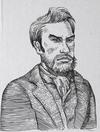
This clip shows the emergence of Arthur Boyd as a painter of international regard, through his series of paintings called Love, Marriage and Death of a Half-caste, also known as the 'Bride’ series. A series of close-ups and details of early Boyd paintings with voice-over narration describe Boyd’s development as a painter in Australia and in London. Barry Pearce, Head Curator of Australian Art at the Art Gallery of New South Wales since 1978, describes Boyd’s trip to London and the success of his first overseas exhibition. A photograph of Boyd as a young man is shown.
Educational value points
- As the clip suggests, travel and place were important in the life and work of Arthur Boyd (1920–99). Boyd was born into an artistic family where he learnt the skills of painting, pottery and printmaking. At the end of the Second World War Boyd set up a pottery studio at Murrumbeena in Victoria before moving with his family to England where his paintings drew critical acclaim. For the rest of his life Boyd spent time living in both England and Australia. In Australia, Boyd lived and worked at Bundanon, a property in southern New South Wales. He donated Bundanon to the nation as a centre for the Arts in 1993. Boyd was named Australian of the Year in 1995.
- The clip explores paintings from the Love, Marriage and Death of a Half-caste series. In 1951 Boyd travelled to central Australia where he witnessed first-hand the poverty and disenfranchisement of Indigenous Australians. This disconnectedness between the two communities, Indigenous and white settler, was to provide the central theme in the series through the images of white bride and half-caste lover, often portrayed in an uncertain embrace.
- Boyd is described as the 'antipodean Chagall’. Marc Chagall (1887–1985) was a Russian-born painter whose 'fantastic’ vision influenced the Surrealist Movement. Chagall’s paintings, vivid in colour and often depicting episodes from Russian folktales or village life, are characteristically populated by people or objects that seem to float within the landscapes they inhabit, a motif also employed in the work of Arthur Boyd.
- Boyd’s later work was deeply influenced by his initial journey to Europe in 1959 where he saw first-hand the work of the great European artists, particularly that of Goya. Boyd’s landscapes often portray figures that bridge the old and new worlds, blending Greek myths and biblical allegory with uniquely Australian stories and Indigenous spirituality.
- As explored by the clip, Boyd had an important role in taking Australian modernist art to a wider audience. During the 1950s and 60s, Arthur Boyd, Albert Tucker (1914–99), Russell Drysdale (1912–81) and Sidney Nolan (1917–92) all exhibited their work overseas, bringing to US and European audiences their particular vision of Australian landscapes, society and history.
- Arthur Boyd was one of a generation of artists and intellectuals that included Albert Tucker, John Perceval (1923–2000), Sidney Nolan and Joy Hester (1920–60), who emerged during the 1940s and 50s and were associated with Heide, the home of John and Sunday Reed at Heidelberg in Melbourne, now the Heide Museum of Modern Art.
Notes provided by The Learning Federation and Education Services Australia
Need to license this item? A/V professionals and researchers can shortlist licensing enquiries via our NFSA Pro catalogue search and membership.
Collections to explore

Painting
Illustration
Contemporary art
Start your own collection
A free Your Stuff account allows you to save, organise and share your favourite videos, audio and stories.


